
About the Author:
Jeff Nunn is the founder of Project Biohacking. With over 30 years of biohacking practice, he applies decades of self-experimentation methodology to peptide research, dosing math, and vendor evaluation.
Two versions of the same peptide, separated by a single chemical addition that changes half-life, dosing frequency, and side effect risk.
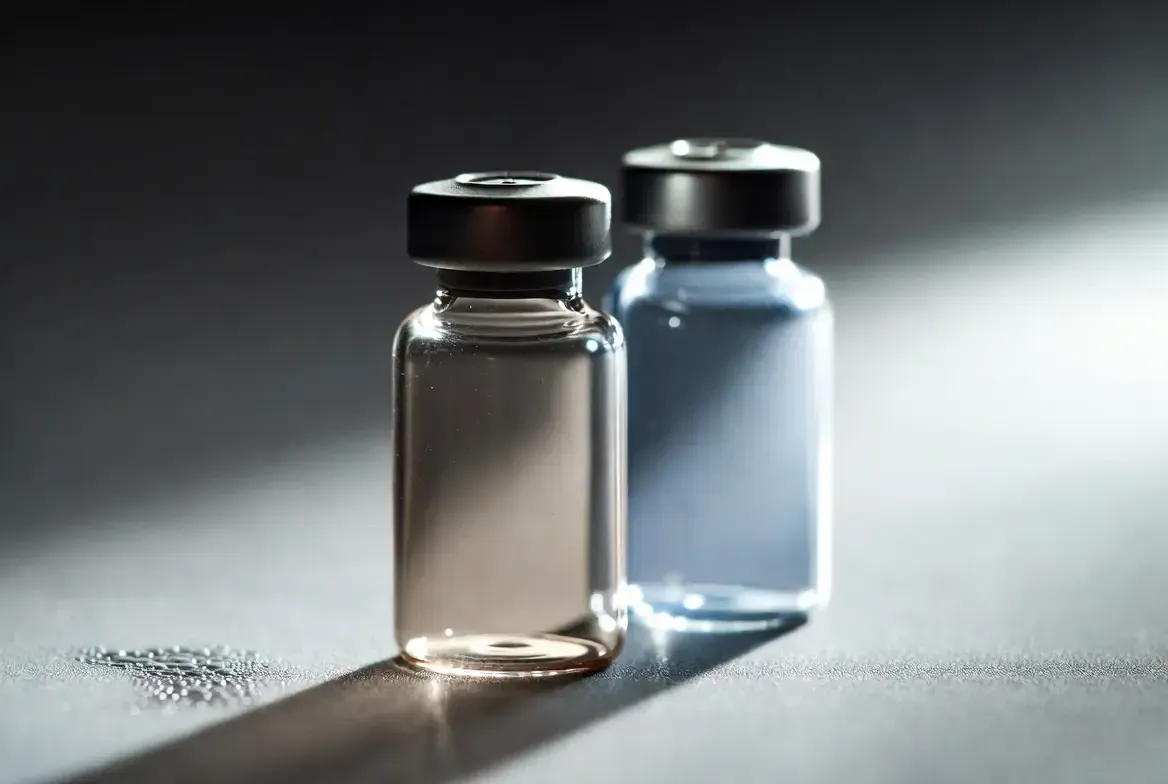
CJC-1295 is a synthetic peptide. It mimics growth hormone-releasing hormone, the natural signal that tells the pituitary gland to release growth hormone. There are two versions of this peptide. They share the same core structure, but they behave very differently inside the human body.
The difference is one small chemical addition called the Drug Affinity Complex, or DAC. That single change affects:
For anyone studying the comparison, the real question is rarely which version "works." Both engage the same receptor pathway. The deeper question is what kind of physiology each version produces in the human body, and what tradeoffs come with each pattern.
CJC-1295 is built on the first 29 amino acids of natural growth hormone-releasing hormone, one of several research peptides studied for growth hormone signaling. The molecule has a few small modifications that protect it from being broken down by enzymes in the bloodstream.
The base molecule is sometimes called Modified GRF (1-29), or CJC-1295 No DAC. This version is already engineered to last longer than the body's natural hormone. But it still has a short active window, which matches the way the human body normally uses growth hormone. The body releases GH in brief waves, not as a steady stream. This rhythm is part of how the gland regulates itself.
The DAC version takes things further. It adds a maleimide group to the peptide. This group forms a chemical bond with albumin, the most common transport protein in human plasma. Once the peptide is anchored to albumin, it is shielded from breakdown for days instead of minutes.
The DAC component is a persistence strategy. The peptide does not become more powerful at the receptor. It becomes more durable in circulation. Albumin carries CJC-1295 through the circulatory system and releases it slowly over time.
This is why the comparison matters in research. The two forms are the same compound at the receptor level. They act on the same pituitary gland. But they produce very different signaling patterns in the human body because one is anchored and the other is not.
Here is the core difference in plain terms:
That gap, between minutes and days, is the entire story.
The half-life difference leads to very different dosing schedules. Frequency is set by the molecule itself.
CJC-1295 No DAC is typically injected once or twice daily in research protocols. Many users time the injection before sleep. The pituitary gland releases the most growth hormone during the first one to two hours of deep sleep. A short-acting GHRH analog can boost that natural pulse without overriding it.
CJC-1295 DAC follows a weekly or twice-weekly schedule. Once it is injected, it cannot be cleared quickly. Extra doses simply add to what is already in circulation. Researchers using the DAC version aim for a steady baseline rather than discrete pulses. Researchers using either version often work backward from a target concentration when planning a protocol, which is where a peptide dosage calculator becomes useful for translating vial size and reconstitution volume into a workable dose.
The physiological consequences are not small. Pulsatile signaling, the kind preserved by No DAC, more closely matches how the human body has evolved to use growth hormone. Sustained elevation, the kind produced by DAC, places the system in a state it does not normally occupy. Neither pattern is automatically better. They answer different research questions and produce different downstream effects on skeletal muscle, fat metabolism, and IGF-1 levels.
Most of growth hormone's long-term effects come through insulin-like growth factor 1, written as IGF-1. The liver produces IGF-1 in response to GH signaling. IGF-1 is the hormone that actually drives many of the physical results people associate with growth hormone. Growth hormone secretagogues like CJC-1295 are one branch of a much larger landscape. For how peptides are studied across muscle, immunity, joints, sleep, and other systems, see our overview of what peptide support actually means.
IGF-1 is involved in:
Both versions of CJC-1295 raise IGF-1, but the curve looks different for each form. CJC-1295 No DAC produces brief IGF-1 increases that rise and fall with each GH pulse. CJC-1295 DAC produces a flatter, more sustained elevation.
Over time, this distinction shapes how the human body responds. Sustained IGF-1 keeps anabolic signaling active around the clock. That can support muscle growth and accelerate healing. It also removes the recovery intervals that pulsatile signaling preserves, which has implications for hormonal feedback and metabolic stability.
For research focused on body composition, performance improvement, or rejuvenation outcomes, the choice between pulsatile and sustained signaling is one of the most important variables to design around. The result of any experiment depends on which pattern the protocol produces.
Both versions act on the same receptor, so their side effect categories overlap. The differences come down to how strong and how long the effects are.
Effects reported with both versions include:
These effects are usually short-lived and tend to fade as the body adjusts.
Effects more commonly reported with the DAC version:
The mechanism here is straightforward. When IGF-1 stays elevated continuously, the body lacks recovery intervals. Several physiological systems begin to adapt to the new baseline. Insulin resistance is the most consistently flagged concern in research literature on long-acting GH-elevating compounds.
The No DAC version's pulsatile pattern more closely resembles natural signaling. This pattern is generally linked with fewer water retention complaints, lower observed risk of insulin sensitivity shifts, and fewer joint-related symptoms. That does not make it risk-free. Headaches, mild fatigue, and injection site reactions still appear regularly in user reports.
Long-term safety data is genuinely limited for both forms. No large-scale clinical trial has tracked either version across the multi-year window needed to establish a strong safety profile in humans. Most data comes from short research periods, animal experiments, and end user reports rather than controlled long-term studies. This evidence gap is real, and protection against unexpected long-term effects depends on honest acknowledgment of what is not yet known.
Both versions of CJC-1295 are sometimes studied alongside Ipamorelin, a selective growth hormone secretagogue that acts on the ghrelin receptor rather than the GHRH receptor. Ipamorelin is a selective growth hormone secretagogue. It acts on the ghrelin receptor rather than the GHRH receptor. The combination produces layered signaling: GHRH analog activity from CJC-1295 plus secretagogue activity from Ipamorelin. Both pathways meet at the same pituitary gland.
The No DAC version is the more common partner in this protocol. Its short window aligns naturally with Ipamorelin's similarly brief activity. The two can be administered together to produce a coordinated pulse. The DAC version maintains continuous receptor activation, which changes how a co-administered secretagogue behaves. Neither pairing is approved as a therapy, and the safety data on combination protocols is even thinner than the data on either peptide alone.
Other peptides studied within the same category include:
These compounds are usually referenced for comparison rather than co-administration. Their existence in the broader research landscape is part of why CJC-1295 in either form continues to be studied.
Both forms of CJC-1295 are typically supplied as lyophilized powder. Storage and handling are nearly identical for both versions. The DAC linkage does not change the storage requirements. Anyone new to handling lyophilized peptides should review a peptide reconstitution guide before mixing the vial, since technique mistakes at this step compromise the research before the first injection.
Before reconstitution:
After reconstitution with bacteriostatic water:
Standard sterile injection technique applies regardless of which version is in use. Personalization of any handling protocol should follow the supplier's documentation, not informal guidance from forums or unverified secondary sources. Good design of a research workflow includes labeling each reconstituted vial with the date and tracking how long it has been in use.
In a research context, the choice between DAC and No DAC depends almost entirely on what kind of physiological pattern the protocol is designed to study.
A simple way to frame the decision:
The convenience argument, fewer injections per week, often drives non-clinical decisions. But convenience operates on a separate axis from biological fit. Problem solving in protocol design should start with the research question, not the dosing schedule.
Neither version is approved by regulatory agencies for general therapeutic use. Both remain investigational compounds. Existing medical guidelines do not endorse either form for performance or rejuvenation purposes, and any application outside controlled research carries the legal and health implications that come with that regulation gap.
Peptidology offers CJC-1295 in both DAC and no-DAC forms alongside ipamorelin, with documented HPLC/LC-MS results.
The science on CJC-1295 is real but limited. Early clinical trial data established that the compound raises GH and IGF-1 in humans. The underlying mechanism is well-characterized at the receptor level. Beyond that foundation, most of what is published consists of mechanistic studies, animal data, and short-term human observations.
Long-term outcomes, large-population safety data, and head-to-head comparisons of the DAC and No DAC forms in controlled human research are still sparse. Anyone weighing the comparison should treat both versions as research compounds rather than established therapies. Published claims, especially those describing dramatic body composition or rejuvenation outcomes, deserve the same skepticism that applies to any partially-studied molecule.
The chemistry is interesting. The physiology is plausible. The complete safety picture is still being assembled, and the experience of any individual end user is not a substitute for properly designed clinical research.
CJC-1295 sits on a separate litigation track with a court-ordered FDA deadline in 2027, part of the FDA peptide compounding fight playing out this year.
For deeper context on peptide research practices, compound sourcing standards, and reconstitution references, the Project Biohacking knowledge base offers compound-specific resources alongside calculation tools and a directory for
peptide vendor coupon codes. Independent verification of any supplier remains the responsibility of the researcher, and
working with a qualified peptide coach is appropriate before considering any peptide outside a controlled research setting.
CJC-1295 DAC vs CJC-1295 No DAC FAQs:
The difference is a small molecular attachment called the Drug Affinity Complex. CJC-1295 DAC binds to albumin in the bloodstream, which extends its half-life to several days. CJC-1295 No DAC lacks this attachment and is cleared within about 30 minutes after injection.
DAC stands for Drug Affinity Complex. It is a maleimide-based addition that lets the peptide form a chemical bond with circulating albumin, which dramatically extends its active window in the human body.
CJC-1295 No DAC is typically administered once or twice daily because of its short half-life. CJC-1295 DAC is administered once or twice weekly because it remains active in the bloodstream for several days.
CJC-1295 No DAC. Its short half-life produces a pulsatile signaling pattern that resembles the body's natural growth hormone rhythm. The DAC version produces a sustained elevation instead of discrete pulses.
Side effects linked with prolonged growth hormone elevation, including water retention, joint stiffness, headache, and shifts in insulin sensitivity, are more often reported with the DAC version. The reason is that IGF-1 stays elevated continuously without recovery intervals.
Both versions have been studied alongside Ipamorelin, a selective growth hormone secretagogue that acts through the ghrelin receptor. The No DAC version is the more common pairing because its short window aligns with Ipamorelin's similarly brief activity.
Neither version is approved for general therapeutic use. Both remain investigational compounds available mostly within research contexts. Existing medical guidelines do not endorse either form for performance or rejuvenation purposes.
Both versions are stored refrigerated as lyophilized powder, protected from light. Once reconstituted with bacteriostatic water, the solution should be kept refrigerated and used within the supplier's specified window, usually one to two weeks. Cloudiness or visible particles signal contamination.

About the Author:
Jeff Nunn is the founder of Project Biohacking. With over 30 years of biohacking practice, he applies decades of self-experimentation methodology to peptide research, dosing math, and vendor evaluation.
Important Disclaimer: The content on Project Biohacking is for educational and informational purposes only and is not intended as medical advice, diagnosis, or treatment. Always consult a qualified healthcare professional before making any changes to your health regimen, starting new supplements, peptides, or protocols. Nothing on this site establishes a doctor–patient relationship, and you use the information at your own risk. Research compounds discussed here are sold for laboratory research purposes only and are not approved for human or veterinary use or consumption.
“For educational use only. Not medical advice. Read our full disclaimer.”
+1 214-278-4039
All Rights Reserved | Project Biohacking