
Peptide Therapy
What Is Peptide Therapy?
Peptide therapy, also called peptide treatment or peptide-based treatment, uses specific chains of amino acids called peptides to target and regulate functions throughout the body. Peptides act as signaling molecules, instructing cells to perform specific actions such as healing, regeneration, or hormone production. If you are weighing this approach against conventional supplements, our guide to peptide therapy vs supplements lays out the key distinctions.
As we age, natural peptide production declines, which can show up as fatigue, weight gain, reduced immune function, and slower recovery. Peptide therapy aims to replenish and optimize these compounds so the body can restore balance and function at the cellular level.
How Peptide Therapy Works
Peptide therapy works by signaling, not brute force. Each peptide carries a specific instruction that binds to cellular receptors and stimulates a precise biological pathway, which is why these therapeutic peptides are described as a targeted approach within functional and regenerative medicine rather than a one-size-fits-all treatment. Instead of masking symptoms, the goal is to address underlying imbalances at the source. In practice, peptides are used to support tissue regeneration, balance hormone signaling, restore biochemical communication, or enhance physiological function, with the compound chosen to match the intended outcome.

Types of Peptides Used in Therapy
Peptides are short chains of amino acids that act as the body's signaling molecules; our full primer on
what are peptides
covers the chemistry and the main families in depth. In a therapy context, a handful of categories do most of the work: signal peptides that drive tissue repair, neuropeptides that influence mood and cognition, and hormonal peptides that regulate energy, metabolism, and growth. For a closer look at how these short chains operate inside the cell itself, see our primer on
what cellular peptides are and how they work.
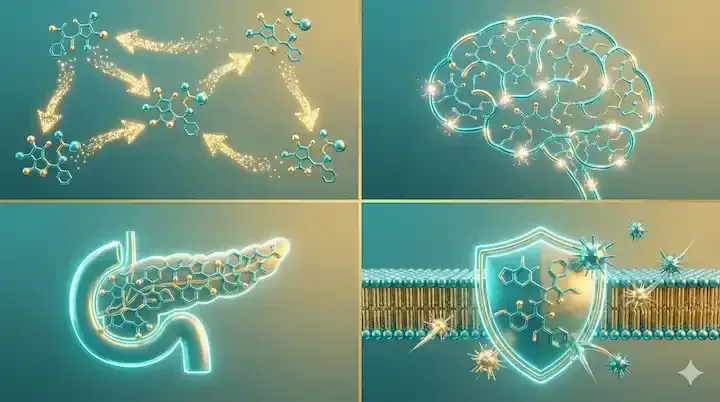
Most peptides used in protocols are synthetic versions of these natural classes, engineered for greater stability, longer half-lives, or more targeted effects. BPC-157 is studied for tissue repair in muscles, tendons, and ligaments. Thymosin alpha-1 is studied for immune support through T-cell activity, covered in our
Thymosin alpha-1 guide. Melanotan II is noted for effects on skin pigmentation, libido, and fat metabolism. Synthetic peptides fill the gap when the body's own production declines or when a targeted intervention is the goal.

What Peptide Therapy Is Used For
Common Goals and Applications
Peptides are studied across a wide range of goals, which is why peptide therapy draws interest from clinicians and biohackers alike.
Hormone optimization covers energy, mood, libido, and hormone regulation, including peptides studied for testosterone support. Peptide research also breaks down by sex, since female physiology differs in hormone cycles, body composition, and tissue maintenance. Our overview of peptide benefits for women walks through what the research shows across skin, hormones, metabolism, mood, and recovery. Weight management relies on GLP-1 agonists and metabolic peptides, covered in our full guide to peptide therapy for weight loss.
The newest compound in that class is retatrutide, a triple agonist studied for the largest weight-loss figures yet reported. Injury recovery is one of the most established use cases, with peptides studied to accelerate tissue repair and reduce inflammation, including peptides for athletic performance. Cognitive support is a major research area, and our comparison of the best peptides for mental focus breaks down the brain and nootropic compounds in detail. Immune support reinforces the body's natural defenses, and anti-aging work targets skin elasticity and cellular health. From recovery to longevity, biohacking peptides run through all of these goals, which is why peptides for biohacking draw such a wide audience among self-directed researchers.
Anti-Aging and Longevity
Several peptides are studied specifically for age-related decline. CJC-1295 and Ipamorelin are among the most researched for prompting the pituitary to release growth hormone in a natural, pulsatile pattern, raising IGF-1 and supporting cellular repair and lean mass. On the surface, signaling peptides like Matrixyl have been studied for collagen synthesis: a 2020 evaluation in the Journal of Cosmetic Dermatology reported measurable gains in dermal thickness and
skin
smoothness over 12 weeks in participants aged 45 to 65.

Other peptides target the cellular machinery of aging. Epitalon is studied for telomerase activity, the enzyme that maintains the protective caps on chromosomes, with one Russian study spanning over 12 years recording extended lifespan and improved organ function; our complete epithalon biohacking guide covers how it works, dosing, and cycle structure. Mitochondrial-targeting peptides such as SS-31 and MOTS-c are studied for energy production, AMPK activation, and oxidative-stress resilience across muscle, cardiac, and neural tissue. GHK-Cu, a copper-binding tripeptide, is researched for skin density, wound healing, and hair regrowth, covered in our guide to what peptide grows hair.
On the cognitive side, input quality matters as much as the compound itself. Cerebrolysin, a neuropeptide formulation used in European regenerative practice, has shown improvements in memory and attention in older patients in a 2015 Drugs and Aging analysis.
Their per-batch testing for sterility, endotoxin and heavy metals is set out in the BioEdge Research Labs review, including which two laboratories corroborate each batch.
BioEdge Research Labs lists Cerebrolysin at 30mg alongside its wider cognitive line. Project Biohacking's code PROBIO15 covers the BioEdge cognitive line, Cerebrolysin included.
Over the past five years I have personally tested dozens of peptides, tracking effects on body composition, cognition, sleep, and recovery; the full account is in the
Project Biohacking transformation story.

What Results to Expect, and How Long
Peptide therapy is not a single outcome on a single timeline. Results depend on the compound, the protocol, the goal, and the individual, so expectations are best set per objective rather than as a blanket promise. In the research literature, some signals such as sleep quality, recovery from soft-tissue strain, and injection-site healing are reported within the first few weeks of a consistent protocol, while structural changes tied to collagen, body composition, or hormonal balance are described over longer, multi-month windows.
Goals also shift with life stage, which is why protocols are rarely identical from one person to the next. The hormonal picture of a younger athlete optimizing recovery looks little like the hormone changes women navigate with age, and the peptides and timelines studied for each differ accordingly. Mapping the goal to the right compound, and to a realistic timeline, is the work that happens before any dosing decision.
Whatever the objective, the variable that most often derails results is not the peptide itself but the math behind it. Concentration, reconstitution volume, and dose all compound, and a small error early shows up as an unreliable outcome later. For a GLP-1 compound like retatrutide, the
retatrutide dosage calculator turns vial size and bacteriostatic water into the exact units to draw.
How Is Peptide Therapy Administered
Peptide therapy is administered in several ways, depending on the peptide, the goal, and the protocol. Injectables remain the most bioavailable route, especially subcutaneous injections, which release peptides gradually into circulation and allow precise dosing and timing, important for compounds with short half-lives. Not every peptide needs a needle, though. Depending on molecular structure and stability, some are formulated as topical creams or gels for localized joint and skin use, nasal sprays for compounds that target the brain or cross the blood-brain barrier, or oral tablets and troches for the few peptides that survive stomach acid. The route depends on the peptide's bioavailability, the desired effect, and individual preference: BPC-157 is typically injected, while some cognitive peptides come in nasal form.
Personalized Protocols

No two protocols look the same. Dosage, delivery, and combinations are tailored to goals, history, and lab work, often guided by bloodwork, hormone panels, and symptom patterns. Someone with low IGF-1, high cortisol, and disrupted sleep, for instance, might use a different combination than someone optimizing recovery. Every
peptide therapy protocol is best built around your own data
rather than a generic template. Accurate dosing is where most protocols succeed or fail, so before starting, our
peptide calculator
helps you dial in measurements for your specific concentration and dose.
Safety, Legal Status, and Sourcing
Is Peptide Therapy Safe?
Under appropriate supervision, peptide therapy has shown a favorable safety profile. Reported adverse effects tend to be uncommon and mild: transient injection-site reactions, short-lived fatigue or lightheadedness, and occasional nausea or headache. Because peptides are short-lived in the body and structurally close to molecules it already produces, the side-effect profile studied to date is generally narrower than that of many conventional pharmaceuticals. That profile depends on input quality and correct dosing, not the category alone. Competitive athletes should also confirm a given peptide is not on the World Anti-Doping Agency prohibited list before use, since several common compounds are banned in sanctioned sport.
Research-Only Status and Compounding
Most research peptides sit outside the conventional drug-approval system. In the United States, the compounds discussed here are not FDA-approved for general medical use, and many are sold strictly for laboratory research. If you have seen labels marked "for research use only" and wondered what that means in practice, our breakdown of
research-only peptides
explains it. Material prepared through a licensed
compounding pharmacy
follows a different set of sterility and purity standards than product sold on the open research market, and that distinction is the starting point for any safety decision.
Where to Source Research Peptides
Peptide therapy only works if what is in the vial matches the label, and the research market is uneven: some suppliers run batch-level third-party testing and publish certificates of analysis, many do not. Before any protocol, confirm the supplier posts recent HPLC and mass-spec data matched to the exact lot you receive.
Harder-to-find compounds such as alpha-Klotho, Cartalax and Epithalon sit in the Biolongevity Labs catalog, next to the peptides covered above. Its bioregulator stock changes more often than the rest, so check availability before planning a protocol around one of them. For orders there, Project Biohacking readers use PROBIO15, the Biolongevity Labs coupon code, which is listed with its terms.
Limitless Biotech runs a broader range spanning peptides and nootropics, and it also lists the compounds discussed on this page. The same Project Biohacking code, PROBIO15, applies there for 15 percent off, and can be found on the Limitless Biotech promo code page.
Ameano Peptides lists the growth hormone secretagogues discussed above, Ipamorelin and CJC-1295 without DAC, along with Tesamorelin, Sermorelin, and several pre-mixed blends. One of those blends is sold as CJC-no DAC / Ipamorelin Blend 5mg/5mg, and the discount code for Ameano Peptides from Project Biohacking is PROBIO, which discounts the cost by 10 percent.
Ameano is one of eight suppliers with a Project Biohacking code. The other seven, and what each takes off, are gathered on the peptide vendor page under peptide discount codes.
This page may contain affiliate links. We only recommend suppliers whose third-party testing we have personally verified.
FAQ for Peptide Therapy
What is peptide therapy?
Targeted use of short amino-acid chains that signal the body to repair or adapt—used as one tool within a broader biohacking plan.
Where should I start?
Read the guide, use the calculator/reconstitution walkthrough, or choose Biohacking Foundations for hands-on help.
How is peptide therapy different from taking hormones?
While synthetic hormones replace what the body is missing, peptide therapy often works by signaling the body to produce its own natural hormones. For example, peptides like CJC-1295 and Ipamorelin trigger the pituitary gland to release growth hormones in a natural, pulsatile way. This makes the therapy more precise and often results in fewer side effects than traditional hormone replacement.
Do I have to use needles, or are there other delivery methods?
While subcutaneous injections are common because they offer high bioavailability and precise dosing, they are not the only option. Depending on the specific peptide and its purpose, other delivery methods include:
- Nasal Sprays: Often used for peptides targeting cognitive function or those that need to cross the blood-brain barrier.
- Topical Creams: Used for localized skin rejuvenation or joint repair.
- Oral Tablets: Suitable for specific peptides (like BPC-157) that can survive the digestive process.
What are the primary anti-aging benefits of peptide therapy?
Peptide therapy addresses aging at the cellular level by:
- Boosting Collagen: Peptides like GHK-Cu and Matrixyl stimulate fibroblasts to improve skin elasticity and reduce wrinkles.
- Enhancing Energy: Mitochondrial-targeting peptides like MOTS-c help restore physical stamina and metabolic health.
- Protecting DNA: Peptides like Epitalon help lengthen telomeres (the protective caps on chromosomes), which can slow the biological aging process.
Can peptides help with injury recovery and muscle repair?
Yes, certain peptides are specifically used for regenerative medicine. BPC-157 is a widely discussed synthetic peptide that accelerates the healing of muscles, tendons, and ligaments. Another peptide, Thymosin Beta-4, is often used to support tissue repair and reduce inflammation after an injury or surgery.
Is peptide therapy safe, and do I need a prescription?
Peptide therapy has a strong safety profile when used under medical supervision. To ensure safety and potency, it is vital to source peptides through licensed compounding pharmacies rather than unregulated vendors. Protocols should always be customized based on individual bloodwork and diagnostic panels to ensure the dosage is appropriate for your specific biology.
How long does it take for peptide therapy to work?
It depends on the compound, the protocol, and the individual. Some signals are reported within the first few weeks of consistent use, while changes tied to collagen, body composition, or hormonal balance are described over longer multi-month windows.