
How to Reconstitute Peptides: Step-by-Step Mixing Guide
Tools & Supplies Needed for Peptide Reconstitution
Before you start, gather everything in a clean, organized workspace.
Items for Reconstitution 1
-
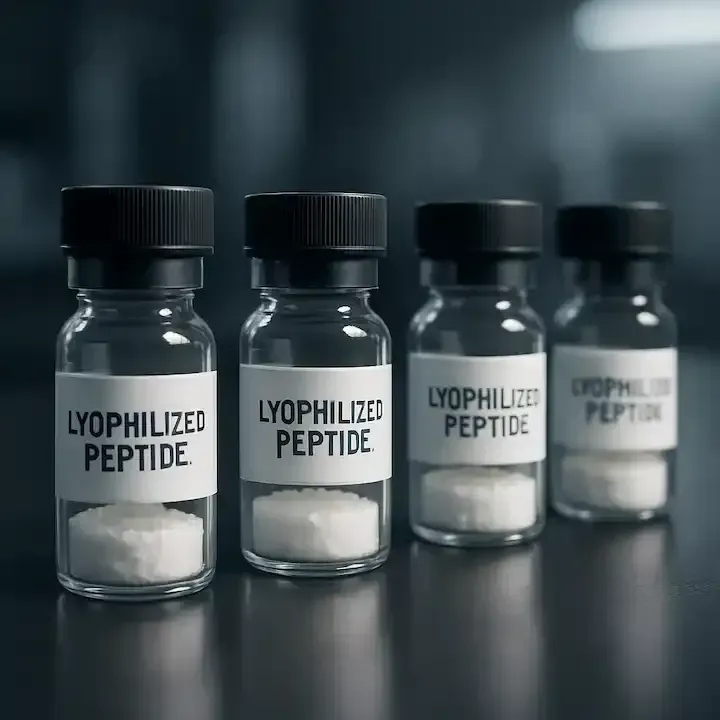
Vials of lyophilized peptide powderPeptide Reconstitution Guide List Item 1
Freeze-dried peptide powder ready for reconstitution and use.
-
Bacteriostatic water (BAC)Item Link List Item 2
Preferred solvent; contains 0.9% benzyl alcohol to inhibit bacterial growth. Use BAC water for injection strictly for research purposes.
-
Alcohol swabsItem Link List Item 3
70% isopropyl swabs to maintain sterility during preparation.
Items for Reconstitution 2
Accurate reconstitution only matters if the vial contains what the label claims, which is why sourcing from vendors that publish batch testing is the first step.
What a Peptide Certificate of Analysis Must Include
Publishing a certificate of analysis is not the same as publishing a useful one. A credible COA names four things: the lot number printed on the vial in your hand, the measured purity percentage, the analytical method used, and the independent laboratory that ran the test. High Performance Liquid Chromatography establishes purity. Mass spectrometry confirms the molecule matches the sequence on the label. A purity figure with no lot number, no named method, and no outside laboratory is a marketing claim rather than a test result, and no amount of careful reconstitution technique compensates for a vial that held the wrong compound at the start.
Limitless Life Nootropics now operates as Limitless Biotech. The rename covers the same company, the same catalog, and the same domain, so a code issued under either name works at the same checkout. Limitless Biotech lists the compounds this guide covers. The Project Biohacking limitless life nootropics discount code is PROBIO15, which takes 15 percent off most of the catalog.
Limitless Biotech publishes HPLC and LC-MS certificates per batch, with the issuing laboratory named on each one rather than referred to generically. Which laboratories are current, and what the panel does not reach, is covered in our review of Limitless Biotech.
Ameano Peptides publishes a browsable library of roughly fifty certificates, each linked to a Janoshik Analytical report carrying its own task number. Those reports cover purity by HPLC and identity by mass spectrometry, so both the method and the outside laboratory are named. Our review of Ameano Peptides goes through that library and its scope.
Purity is where most certificates stop. Peptidology runs a seven-procedure release battery on every lot through independent ISO/IEC 17025-accredited laboratories, reporting endotoxin levels, heavy metals, and sterility alongside the purity figure, and the Project Biohacking review of Peptidology names the labs. Our guide to peptide COA and endotoxin testing explains what each of those layers rules out and what a purity number alone does not. Reconstituting a sterility-verified vial and reconstituting a vial tested only for purity are not the same procedure carrying the same risk.
Peptidology lists research peptides alongside its own reconstitution solutions, in both benzyl alcohol and alcohol-free forms, so a single order covers both sides of a reconstitution. The Project Biohacking
peptidology coupon code is PROBIO15, applied at checkout for 15 percent off.
Project Biohacking scores research peptide suppliers against the COA standard above, covering testing depth, lot-level documentation, laboratory independence and certificate accessibility. The criteria and every supplier's score are on our rating methodology page.
The steps in this guide work the same whichever vendor your vial comes from. Each vendor's current discount and the Project Biohacking code that applies are listed in the research peptide coupon directory.
Peptide Safety, Hygiene & Dosage Accuracy
Calculate dosages precisely to ensure accuracy. For example, reconstituting 5 mg peptide with 2 mL BAC water means each 0.1 mL equals 0.25 mg. Reconstituting with the wrong water volume changes every dose you draw, so it helps to know can you overdose on peptides before measuring. Our peptide calculator hub covers compound-specific tools for BPC-157, TB-500, blends, and GLP-1 dosing.
Which water you use matters as much as how much: for what bacteriostatic water is, how the 0.9% benzyl alcohol preservative works, and how long a vial stays usable after the first puncture, see the full guide to bacteriostatic water for peptides.

Maintain a detailed research log to track reconstitution dates, storage conditions, and observations. This helps ensure consistent and safe peptide use.
Always use sterile equipment and never reuse syringes or needles. Label all materials clearly with peptide name, reconstitution date, and concentration.
Step-by-Step Guide to Reconstituting Peptides
List of Services
-
1. Prepare your workspaceItem Link List Item 1
Wash your hands thoroughly and wear gloves. Wipe down your surface with disinfectant.
-
2. Disinfect the vialsItem Link List Item 2
Use alcohol swabs to clean the rubber stoppers of both the peptide vial and BAC water vial.
-
3. Draw bacteriostatic waterItem Link List Item 3
Use a fresh sterile needle and syringe. Slowly draw up the volume of BAC water you plan to use.
List of Services
-
4. Inject water into the peptide vialItem Link List Item 4
Insert the needle at an angle against the glass side of the vial. Let the water gently run down the side to avoid foaming.
-
5. Dissolve the peptideItem Link
Do not shake. Gently swirl or roll the vial until the powder dissolves completely. Some peptides take longer to dissolve.
-
6. Store correctlyItem Link
Most peptides should be refrigerated (2–8°C / 35–46°F).
Avoid heat, light, repeated freeze-thaw cycles, and shaking
After reconstituting a peptide, the most common mistake is incorrect dosing. To eliminate guesswork, use our peptide reconstitution calculator, which converts vial strength and bacteriostatic water volume into precise dosing amounts.
Calculating Pet Doses After Reconstitution
Once a peptide is reconstituted, the final concentration determines how much volume needs to be drawn for each dose. If you're calculating doses for animals, use the peptide calculator for pets to convert weight-based dosing into the correct draw volume based on your solution.
Why Proper Reconstitution Matters
Peptides are fragile chains of amino acids that degrade quickly if handled improperly. Proper reconstitution ensures maximum stability and shelf life, accurate dosing for research, and reduced contamination risk. This is especially important when reconstituting healing peptides like BPC-157 and TB-500, see the complete guide to peptides for injury recovery for context on how these compounds are used in recovery protocols. Accurate reconstitution also affects how calculators read your concentration, our guide to why peptide calculators differ covers how water volume choices lead to different outputs across tools.
Proper storage after reconstitution is equally critical, our peptide storage guide covers exactly how long reconstituted peptides remain stable and how to preserve potency. See whether BPC-157 is safe for what the safety literature actually supports, and TB-500 tissue repair research for what the studies measured and what they did not.
Biolongevity Labs lists standalone BPC-157 alongside the GLOW and KLOW blends that include TB-500. Blend totals matter for this step, because the figure on the label covers every peptide in the vial rather than one, which changes the volume you reconstitute with. Blend or standalone, the Biolongevity Labs discount code from Project Biohacking is PROBIO15.
Reduced contamination risk
Accurate dosing for research
Maximum stability and shelf life
FAQ for Peptide Reconstitution
What is the best liquid to use for peptide reconstitution?
The preferred solvent is Bacteriostatic Water (BAC). It contains 0.9% benzyl alcohol, which acts as a preservative to inhibit bacterial growth, making it safer for multi-use vials over an extended period compared to sterile water.
Why is it important not to shake the peptide vial?
Peptides are fragile chains of amino acids that can easily degrade or become "damaged" if handled roughly. Instead of shaking, you should gently swirl or roll the vial between your hands until the powder is completely dissolved to maintain the peptide's structural integrity.
How should I add the bacteriostatic water to the peptide powder?
To avoid foaming and prevent damaging the peptide, you should aim the needle toward the inside wall of the vial. Let the water run slowly down the glass side rather than injecting it directly onto the lyophilized powder.
Where should I store my peptides once they are reconstituted?
Most reconstituted peptides are highly sensitive to heat and light. They should be stored in a refrigerator at temperatures between 2–8°C (35–46°F). Keep them away from direct light and avoid repeated freeze-thaw cycles.
Can I reuse syringes or needles during the process?
No. To maintain sterility and reduce the risk of contamination, you must always use fresh, sterile equipment for every step. Never reuse syringes or needles, and ensure you disinfect the rubber stoppers of both vials with 70% isopropyl alcohol swabs before every access.
How do I determine the correct dosage after adding the water?
Dosage depends on the total milligrams (mg) of the peptide and the volume of BAC water added. For example, if you add 2 mL of water to a 5 mg vial, every 0.1 mL of liquid will contain 0.25 mg of the peptide. For more complex calculations, the guide recommends using a specialized Peptide Calculator tool.
Legal Disclaimer:
These statements have not been evaluated by the FDA and are not intended to diagnose, treat, cure, or prevent any disease. This information is for educational and research purposes only. All products are research compounds exclusively for laboratory use under proper IRB oversight.
Peptides are not dietary supplements and are prohibited for human or animal consumption. Products must be handled only by qualified laboratory professionals trained in safe procedures and familiar with associated hazards. By accessing this site, you confirm that you are a qualified researcher using these materials solely for legitimate research purposes in compliance with applicable regulations.