About the Author:
Jeff Nunn is the founder of Project Biohacking. With over 30 years of biohacking practice, he applies decades of self-experimentation methodology to peptide research, dosing math, and vendor evaluation.

A complete guide to KPV peptide research, including gut health benefits, dosage protocols, safety, and anti-inflammatory mechanisms
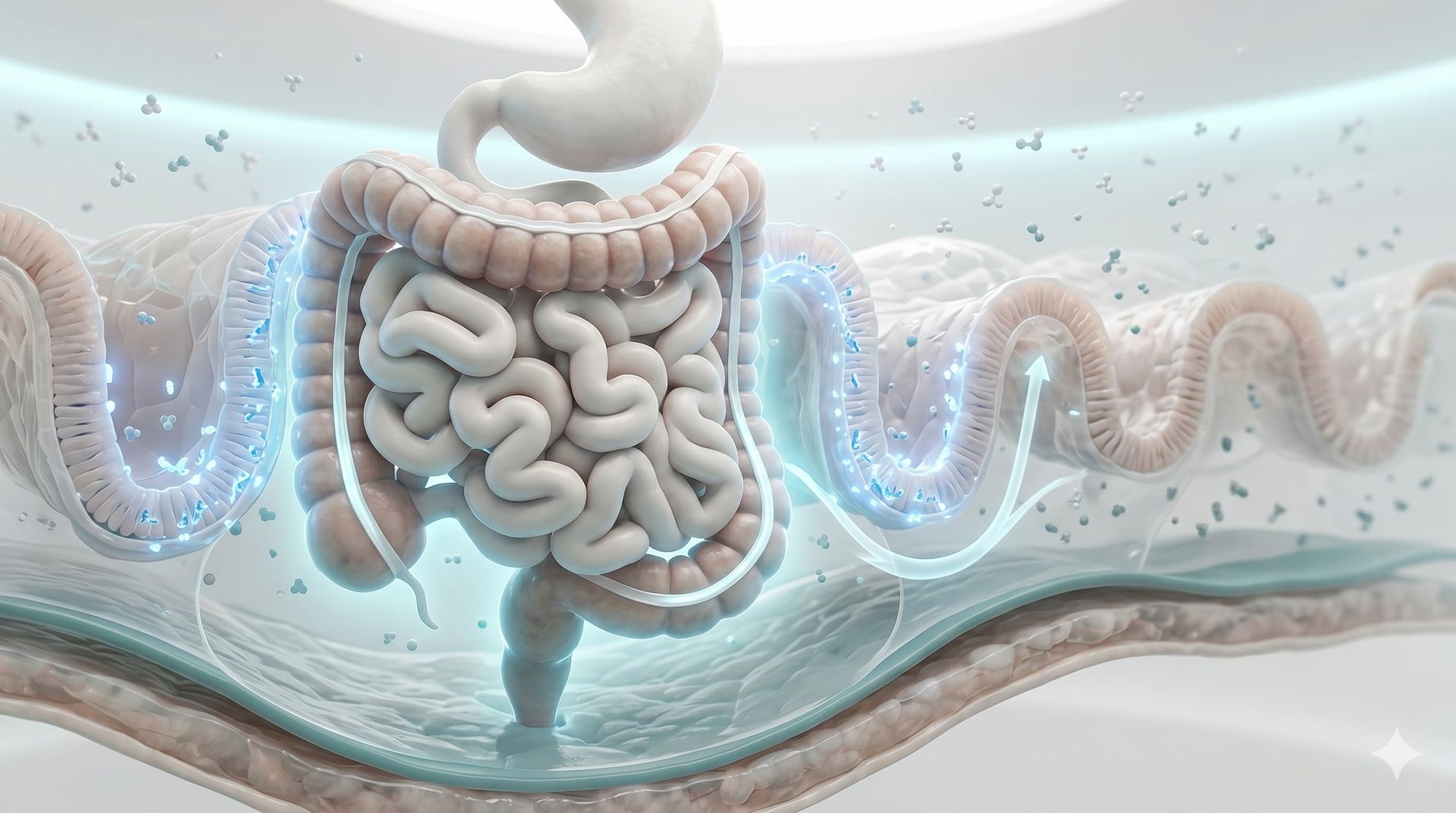
KPV peptide is a short chain of three amino acids: Lysine (K), Proline (P), and Valine (V). This sequence makes it a tripeptide, one of the simplest peptide structures studied in modern research. Despite its small size, KPV has attracted significant scientific attention for its biological activity.
The peptide is not a standalone hormone. It is a fragment derived from a much larger signaling molecule called alpha-melanocyte-stimulating hormone, often written as α-MSH. Specifically, KPV represents the final three amino acids (positions 11 through 13) at the C-terminal end of that parent molecule.
What makes KPV unique is that it retains certain biological activities of α-MSH, particularly anti-inflammatory effects, while lacking the pigment-stimulating properties of the full hormone. This separation of function is one of the reasons researchers consider KPV a compelling candidate for inflammation-focused study. For contrast,
Melanotan 1 is a synthetic α-MSH analog that retains the pigment-stimulating effects KPV lacks, a useful side-by-side for understanding which parts of the parent hormone do what.
KPV peptide operates through several overlapping biological pathways inside the human body, most of them centered on calming inflammatory signaling. Researchers have identified multiple mechanisms that help explain its observed effects in laboratory and animal studies.
Key mechanisms of action include:
What sets KPV apart from many anti-inflammatory compounds is that it appears to reduce inflammation without broadly suppressing the immune system. This selective action is one reason researchers continue to investigate its potential for chronic inflammatory conditions, including those involving recurring infection or persistent epithelial irritation.
Most KPV peptide research has been conducted in laboratory cell models and animal studies, including extensive work in mouse models of colitis and skin inflammation. While human clinical trials remain limited, the existing body of evidence points to several potential areas of benefit.
Anti-inflammatory effects
The most well-documented property of KPV is its ability to reduce inflammation at the cellular level. Studies have shown measurable decreases in inflammatory markers across multiple tissue types, including skin, epithelium lining the gut, and mucous membrane surfaces. Histopathology results in animal studies have shown reduced signs of cellular damage in tissues treated with KPV.
Gastrointestinal support
KPV has been studied for its potential role in inflammatory bowel diseases such as Crohn's disease and ulcerative colitis. Animal models have shown reduced colonic inflammation and improved healing of the large intestine following KPV administration. Research has also explored how KPV interacts with the gut microbiota and influences intestinal permeability, two factors closely tied to chronic gut inflammation. KPV is not the only gut peptide drawing research attention, and readers comparing options often look at vasoactive intestinal peptide in the gut, a neuropeptide being studied for how it drives intestinal secretion and calms inflammation.
Skin health applications
Research has explored KPV in the context of inflammatory skin conditions including:
KPV sits inside a broader category of peptides studied for skin repair. Our complete guide to peptides for skin covers GHK-Cu, BPC-157, and Matrixyl alongside KPV — the most-researched options for inflammation, collagen support, and barrier repair.
Some experimental approaches have even examined delivery through a transdermal patch to support consistent skin-level absorption.
Wound healing support
Because KPV reduces inflammation without halting immune function, researchers have investigated its role in tissue repair. Inflammation is a natural part of healing, but excessive inflammation can delay recovery, especially when bacteria or low-level infection are present at the wound site. KPV appears to help regulate this balance and support the body's natural healing process. For readers comparing healing peptides, the Wolverine Protocol stack of BPC-157 and TB-500 is the most-researched combination for tissue repair — and uses a similar inflammation-modulating logic.
Immune system regulation
Rather than acting as an immunosuppressant, KPV is described in research literature as an immunomodulator. In some contexts, it has even been categorized as a mild immunostimulant due to its ability to recalibrate, rather than shut down, immune responses. This may be useful in autoimmune disease research, where the immune system mistakenly attacks the body's own tissue. This immunomodulating profile puts KPV in the same category as
Thymosin Alpha-1, another peptide studied for its ability to rebalance — rather than suppress — immune signaling.
The anti-inflammatory profile of KPV is what distinguishes it from many other research peptides. Inflammation is a foundational driver of countless chronic conditions, from joint discomfort to digestive disorders to certain skin diseases. Systemic inflammation, in particular, has been linked to a wide range of long-term health problems.
KPV addresses inflammation at several levels:
This multi-layered approach is part of what makes KPV interesting to researchers exploring conditions where standard anti-inflammatory drugs, such as corticosteroids, may have undesirable side effects or limited long-term efficacy.
KPV peptide remains classified as a research compound. It is not approved as a medication by the FDA or similar regulatory agencies. However, research interest has grown across several specific areas, with ongoing animal testing and early-stage human investigations.
Areas of active investigation include:
It is important to emphasize that none of these applications have been clinically approved. KPV is among the compounds being studied for its role in inflammation research. Limitless Biotech lists KPV as a vial and as capsules, and in a gastro research blend alongside BPC-157 and N-Acetyl Larazotide. The Limitless Biotech discount code that Project Biohacking carries is PROBIO15, and it takes 15 percent from the order at checkout.
Ascension Peptides lists KPV at 10mg as a single vial. It also carries BPC-157 at 10mg, one of the compounds in the gastro blend above, so both can come from one order. Ascension's KLOW 80mg listing names KPV 10mg among its four compounds, and Project Biohacking's coupon code for Ascension Peptides is PROBIO20, 20 percent off at checkout.
BioEdge Research Labs has two KPV listings on its product grid, one titled KPV and one titled KPV 500mcg (60 Count). Its four-compound blend is sold under the name KLOW: GHK-Cu, KPV, BPC-157 and TB-500, and entering the
BioEdge Research Labs promo code PROBIO15, which Project Biohacking lists, cuts 15 percent from the total.
Because KPV peptide is not an approved therapeutic, there are no officially established dosing protocols. Research literature and compounding pharmacy references provide general ranges, but these should be viewed as informational rather than prescriptive.
Commonly referenced dosage (pharmacology) ranges in research contexts:
Working out mcg-per-injection from the reconstitution volume on the vial is where most dosing errors happen. The free peptide dosage calculator converts vial size, bacteriostatic water volume, and target dose into exact unit measurements on an insulin syringe.
Several factors influence dosing decisions in research settings:
Oral KPV faces a particular obstacle: peptides are vulnerable to breakdown in the digestive system, especially when exposed to gastric acid. This is why some oral formulations use enteric coatings or other protective package delivery systems designed to improve absorption.
KPV peptide use should always be approached under the guidance of a qualified healthcare professional. Self-administration without medical oversight is not recommended.
The safety profile of KPV peptide, based on currently available research, is generally considered favorable in preclinical studies. However, comprehensive human safety data remains limited, and rapid diagnostic tests for monitoring peptide response are not yet standardized.
What current research indicates:
Factors that affect safety outcomes:
Because long-term human safety data has not been fully established, anyone considering KPV peptide should consult with a knowledgeable healthcare provider. This is especially important for patients with chronic conditions, those taking other medications, or anyone pregnant or breastfeeding. Sourcing matters as much as supervision. Our
peptide vendor coupon codes page lists every supplier we track with its current code and rating, and the
rating methodology page explains how those ratings are produced.
The body of research on KPV peptide is growing but remains heavily weighted toward preclinical work. Most published findings come from in vitro experiments using cell cultures and in vivo studies using animal models, particularly mouse and rat experiments. A handful of small clinical trial efforts have begun to explore human applications.
What the research has explored so far:
Gaps in the current research:
Researchers continue to publish new findings, and KPV remains an active area of investigation within peptide science. As interest in targeted anti-inflammatory therapies grows, KPV may receive increased attention in clinical research moving forward.
KPV is part of a larger family of melanocortin-derived peptides. Understanding its place within this family helps clarify what makes it distinctive.
Key distinguishing features:
This positioning has made KPV particularly interesting to researchers looking for targeted, mechanism-specific approaches to inflammation, especially in conditions where systemic inflammation contributes to ongoing tissue injury.
Next steps for KPV research
If you're moving from reading to applying, the free peptide dosage calculator works out reconstitution and injection volumes from your vial size and target amount. It handles the unit conversions where most mixing errors happen.
Several of the vendors we cover stock KPV, and each has its own Project Biohacking code. The peptide code directory lists them in one place.
KPV peptide is a synthetic tripeptide made of three amino acids: Lysine, Proline, and Valine. It is derived from the C-terminal region of alpha-melanocyte-stimulating hormone (α-MSH) and is studied for its anti-inflammatory and immune-modulating properties.
KPV works by suppressing pro-inflammatory cytokines like TNF-alpha and IL-6, inhibiting the NF-kB inflammatory pathway, and modulating immune cell behavior. It reduces inflammation without broadly suppressing the immune system, helping protect tissue from ongoing damage.
Research suggests KPV peptide may help reduce inflammation in the gut and skin, support wound healing, modulate immune responses, and address inflammatory skin conditions such as eczema, psoriasis, and atopic dermatitis. It has also been studied for its effects on the intestinal epithelium and gut microbiota balance.
Research-referenced dosages typically range from 200 mcg to 500 mcg daily for oral or subcutaneous forms. Topical formulations are usually compounded at concentrations between 0.01% and 2%. There are no officially established human dosing protocols.
Preclinical research suggests KPV peptide has a favorable safety profile with minimal documented adverse effects. However, comprehensive long-term human safety data is limited. Use should be supervised by a qualified healthcare provider, particularly for patients with autoimmune disease or chronic systemic inflammation.
KPV peptide is studied for inflammatory bowel disease, inflammatory skin conditions, wound healing, immune regulation, and general anti-inflammatory applications. It remains a research compound and is not approved for medical use.
Reported side effects have been minimal in preclinical studies, with occasional mild irritation at injection sites or topical application areas. Systemic side effects have not been widely documented, though human data is limited.
No. KPV is a small fragment (three amino acids) derived from α-MSH. It retains some anti-inflammatory properties of the full hormone but does not cause the pigment-stimulating effects associated with α-MSH, including changes to skin or hair coloration.
Describe the item or answer the question so that site visitors who are interested get more information. You can emphasize this text with bullets, italics or bold, and add links.
Research in mouse models suggests KPV may reduce inflammation in the large intestine, support the integrity of the intestinal epithelium, and influence gut microbiota composition. These effects are being studied in the context of ulcerative colitis and other forms of IBD.
While KPV is not an antimicrobial compound, its anti-inflammatory action may help modulate the body's response to infection-related tissue damage. This is an area of ongoing research rather than established clinical use.

About the Author:
Jeff Nunn is the founder of Project Biohacking. With over 30 years of biohacking practice, he applies decades of self-experimentation methodology to peptide research, dosing math, and vendor evaluation.
Important Disclaimer: The content on Project Biohacking is for educational and informational purposes only and is not intended as medical advice, diagnosis, or treatment. Always consult a qualified healthcare professional before making any changes to your health regimen, starting new supplements, peptides, or protocols. Nothing on this site establishes a doctor–patient relationship, and you use the information at your own risk. Research compounds discussed here are sold for laboratory research purposes only and are not approved for human or veterinary use or consumption.
“For educational use only. Not medical advice. Read our full disclaimer.”
+1 214-278-4039
All Rights Reserved | Project Biohacking