
About the Author:
Jeff Nunn is the founder of Project Biohacking. With over 30 years of biohacking practice, he applies decades of self-experimentation methodology to peptide research, dosing math, and vendor evaluation.
The Science Behind the Most Popular Peptide Recovery Stack in Biohacking
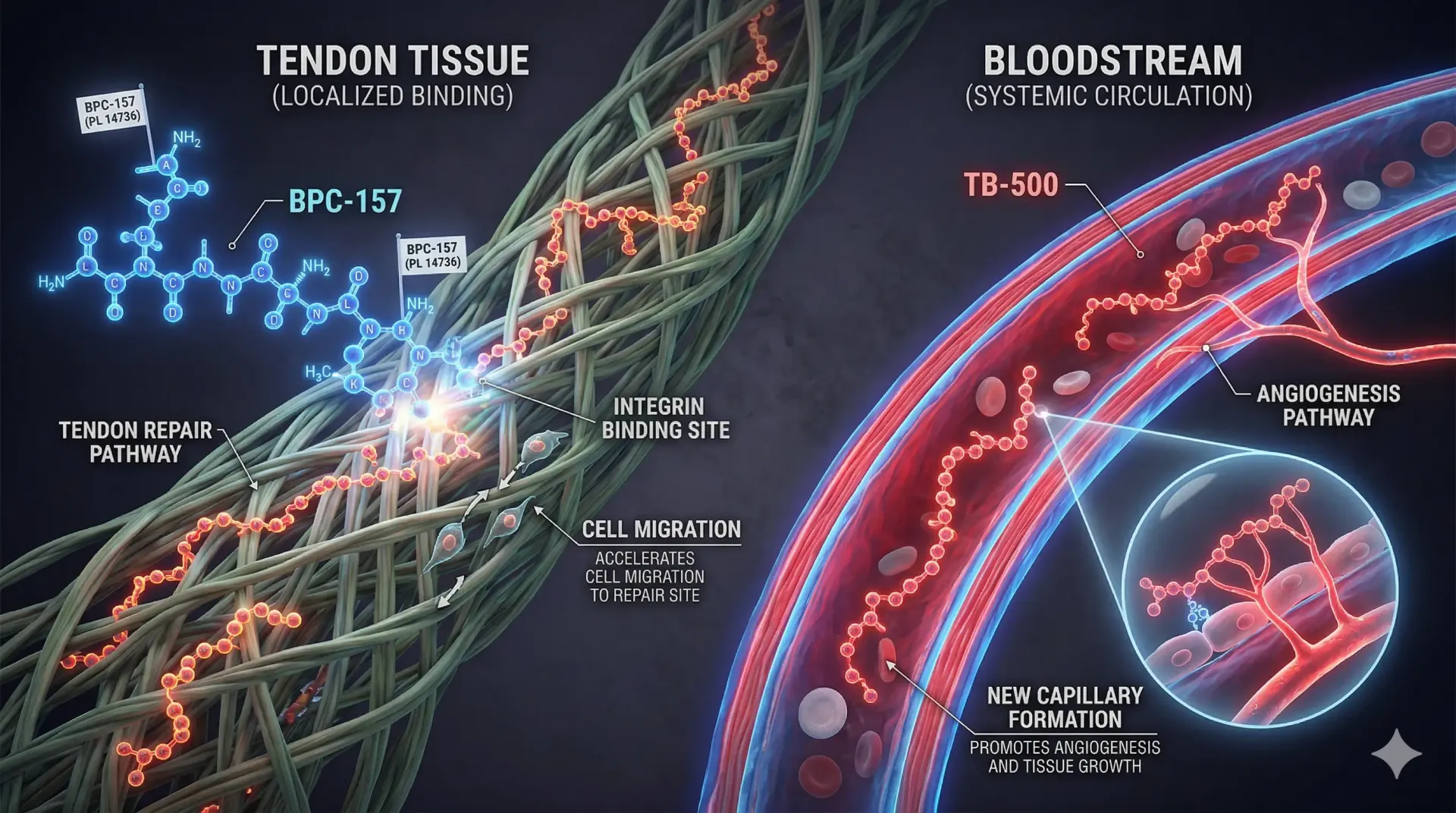
The Wolverine Protocol has become one of the most recognized peptide stacks in the biohacking and performance recovery space. Named after the fictional mutant with near-instantaneous healing, the protocol pairs two well-studied research peptides, BPC-157 and TB-500, into a single coordinated strategy targeting tissue repair, inflammation control, and musculoskeletal recovery. Unlike single-peptide approaches, the Wolverine stack is built on the premise that combining agents with complementary mechanisms produces outcomes neither can achieve alone. Some researchers extend that same logic to a third compound, adding GHK-Cu for matrix remodeling, in our guide to the GHK-Cu, TB-500, and BPC-157 GLOW blend.
This guide covers the science behind the protocol, how each peptide functions, how the stack is structured in research contexts, and what the available evidence suggests about safety and limitations.
The Wolverine Protocol is a research peptide stack combining BPC-157 (Body Protection Compound-157) and TB-500 (Thymosin Beta-4 synthetic analog) into a coordinated recovery and healing protocol. The two peptides are used together because they act on overlapping but distinct biological targets, with BPC-157 emphasizing localized tissue and tendon repair and TB-500 driving systemic cell migration and anti-inflammatory response.
The name is informal. It originated in biohacking and performance communities where the protocol's reputation for supporting accelerated tissue repair led researchers and self-experimenters to draw a loose analogy to Wolverine's regenerative biology in Marvel comics. The name stuck, and it now functions as shorthand for this specific two-peptide stack.
The Wolverine Protocol is used primarily in research contexts involving musculoskeletal injury, wound healing, repetitive strain injury, and post-surgical recovery scenarios. It is not an approved therapeutic and is available only as a research compound.
Evaluating the Wolverine Protocol? Verify third-party testing and COAs before sourcing compounds.
The protocol operates through two parallel but interconnected biological pathways. BPC-157 is a pentadecapeptide derived from a gastric protein sequence. In research models, it has demonstrated effects on angiogenesis (the formation of new blood vessels), collagen synthesis, and the modulation of growth factor expression in injured tissue. These mechanisms position it primarily as a localized repair agent, particularly effective in soft tissue environments like tendons and ligaments.
TB-500 is a synthetic analog of Thymosin Beta-4, a naturally occurring protein involved in cytoskeletal organization and cellular migration. In research settings, TB-500 has been studied for its role in upregulating actin, a protein critical to cell movement and wound closure. TB-500's systemic distribution profile means it circulates broadly through the body rather than concentrating at a single injury site, supporting recovery across multiple tissue types simultaneously.
Together, the two peptides target the healing cascade from different entry points. BPC-157 supports the structural rebuilding of damaged tissue at the injury site while TB-500 promotes the broader immune system response, cellular recruitment, and reduction of inflammatory signaling that can delay recovery. The circulatory system plays a central role in both mechanisms, with blood vessel formation and cell trafficking required for either peptide to produce its documented effects.
BPC-157 and TB-500 are distinct peptides with different structures, origins, and primary research applications. Understanding each individually clarifies why the Wolverine stack is designed the way it is.
BPC-157
BPC-157 is a 15-amino acid sequence first isolated from gastric juice. It does not occur at meaningful concentrations elsewhere in the human body, which makes its research profile unusual. Studies conducted primarily in rodent models have documented effects on tendon-to-bone healing, skeletal muscle repair, and joint recovery.
The peptide appears to accelerate collagen deposition at wound sites and has shown consistent effects on angiogenesis in multiple tissue types. Research on BPC-157 in ligament injury models has demonstrated faster recovery timelines and improved structural integrity compared to control groups.
TB-500
TB-500 is synthesized to replicate the active region of Thymosin Beta-4, a protein found throughout the body that plays a role in organizing the actin cytoskeleton. Actin is essential for cell migration, wound contraction, and tissue remodeling. In research models, TB-500 has been associated with faster wound healing, reduced inflammation in injured tissue, and improved recovery in cardiac and skeletal muscle contexts.
Because TB-500 distributes systemically, it is often described as the protocol's "whole body" component, supporting recovery across multiple injury sites or diffuse inflammation rather than a single localized area. For a full breakdown of how TB-500 works at the cellular level, see our dedicated TB-500 healing peptide guide.
The two peptides interact with the healing process at different stages. BPC-157 is associated with the structural phase of repair, while TB-500 is linked to the inflammatory and cellular recruitment phases that precede structural rebuilding. This layering of mechanisms across the healing timeline is the primary rationale for combining them.
The Wolverine Protocol stack is structured around the complementary timing of BPC-157 and TB-500 activity. In research literature and documented biohacking practice, both peptides are typically administered concurrently rather than sequentially, because their mechanisms address overlapping phases of the healing cascade simultaneously.
The stacking logic is straightforward: BPC-157 targets the injury site and the structural repair process while TB-500 manages systemic inflammation and cell recruitment. Running them together means neither phase is left unsupported. Researchers studying acute musculoskeletal injury have documented better outcomes when both pathways are addressed simultaneously compared to single-agent approaches.
For acute recovery scenarios, the Wolverine stack is often run at higher frequency during the initial injury phase, then tapered as tissue integrity returns. For longer-term performance recovery, lower-frequency maintenance schedules are common in research documentation. The stack adapts to both contexts without requiring a different compound selection.
Research on BPC-157 and TB-500 has produced a range of studied concentrations across different injury models and experimental methodologies. Effective dose ranges vary by body weight, injury type, and study design, and no single consensus dosage exists across the literature.
BPC-157 research studies have used concentrations typically ranging from 1 to 10 micrograms per kilogram of body weight in animal models. TB-500 research has documented similar ranges, though some human self-experimentation reports have extrapolated higher milligram-level quantities from these baselines.
Cycle structure in the research and biohacking community generally follows one of two patterns: an acute or crisis cycle running for four to six weeks at higher frequency, or a lower-dose maintenance cycle extending over eight to twelve weeks. Short cycles are associated with acute injury response; extended cycles are associated with chronic recovery scenarios or performance optimization. The schedule chosen depends on the research objective and the injury severity being addressed.
Calculating appropriate research amounts based on bodyweight and target concentration requires attention to reconstitution variables. The
main peptide calculator takes body weight or a fixed dose along with the vial size and water volume, and returns the units to draw.
Subscribe to the Project Biohacking newsletter for ongoing Wolverine Protocol research updates, stack analysis, and vendor review coverage.
Reconstituting peptides is a required step before any research use of the Wolverine Protocol. Both BPC-157 and TB-500 are supplied as lyophilized powders, meaning they must be mixed with a sterile solvent to create a usable solution. The most commonly used solvent in research settings is bacteriostatic water due to its ability to inhibit bacterial growth after reconstitution.
The mixing process begins by determining the desired concentration. This is calculated based on the amount of peptide in the vial and the volume of bacteriostatic water added. For example, adding 2 mL of bacteriostatic water to a 5 mg vial creates a different concentration than adding 5 mL. For a BPC-157 vial, the BPC-157 mixing and dosage calculator shows the concentration each water volume produces, the units to draw, and how many doses the vial holds. Precision at this stage is critical because all subsequent dosing calculations depend on the accuracy of the initial mixture.
To reconstitute, bacteriostatic water is drawn into a sterile syringe and slowly introduced into the peptide vial. The water should be allowed to run down the side of the vial rather than injected directly onto the powder. This reduces the risk of damaging the peptide structure. The vial is then gently swirled, not shaken, until the powder fully dissolves into a clear solution.
Each peptide in the Wolverine Protocol is typically reconstituted in its own vial rather than combined, so each vial carries its own concentration; the single-vial TB-500 dosage calculator turns the TB-500 vial's milligrams and water volume into a draw in syringe units. When a supplier ships the two peptides pre-combined in one vial, a single draw carries both, and the BPC-157 and TB-500 blend calculator shows the dose of each compound that draw delivers. This allows for more precise control over concentration, stability, and handling. Once reconstituted, the peptides are stored under refrigeration to maintain stability over time.
Because dosing calculations depend entirely on how the peptide is mixed, errors at this stage can compound throughout the protocol. Using a structured tool like the Project Biohacking Peptide Calculator helps ensure consistency between intended and actual concentrations.
The Wolverine Protocol is most frequently studied in injectable form. Both BPC-157 and TB-500 are lyophilized (freeze-dried) peptides that require reconstitution before use, typically with bacteriostatic water. Subcutaneous injection is the dominant delivery route in research documentation, with some protocols also studying intramuscular administration.
Nasal spray delivery of BPC-157 has attracted attention because it represents a non-injectable alternative. The available research on nasal bioavailability for BPC-157 is limited compared to the injectable literature. Mucous membrane absorption presents different pharmacokinetic variables than subcutaneous delivery, including potentially lower systemic availability and altered tissue distribution. The nasal spray format for the full Wolverine stack has not been studied with the same rigor as injectable protocols.
TB-500 nasal delivery has even less research documentation than BPC-157 in the same format. Given TB-500's reliance on systemic distribution to reach multiple tissue sites, absorption efficiency is a meaningful variable. Most documented research uses injection for TB-500 to ensure adequate systemic exposure.
The tradeoff between injectable and nasal formats involves bioavailability, convenience, and research support. Injection has the strongest evidence base for both peptides. Nasal spray is a lower-barrier delivery method, but the evidence supporting its equivalence to injectable routes is not yet established in the published literature.
Research on BPC-157 and TB-500, individually and in combination, has documented a set of outcomes that align with the protocol's intended applications. These outcomes are derived from preclinical models and self-reported biohacker documentation, not from large-scale human clinical trials.
Injury recovery: Animal studies on both peptides have consistently documented faster recovery from musculoskeletal injury, including tendon tears, ligament strains, and muscle damage. The structural repair mechanisms of BPC-157 combined with TB-500's anti-inflammatory activity address the two primary barriers to tissue healing.
Wound healing: BPC-157 in particular has demonstrated consistent wound closure acceleration in research models, with collagen synthesis and angiogenesis both contributing to faster and more complete healing across skin, tendon, and connective tissue types.
Reduced inflammation: TB-500's role in modulating the immune system response to injury supports lower sustained inflammation, which is associated with improved recovery timelines and reduced post-injury stiffness. Researchers exploring inflammation-focused recovery also study KPV, an alpha-MSH-derived tripeptide that suppresses pro-inflammatory cytokines without broadly suppressing immunity. See the guide to
the KPV peptide for inflammation and healing.
Improved mobility: Research models with joint and connective tissue injuries show improved range of motion and reduced stiffness as outcomes of BPC-157 administration, particularly in tendon-to-bone reattachment scenarios.
Performance recovery: Athletes and biohackers applying the Wolverine Protocol typically do so to accelerate return-to-training timelines following musculoskeletal injury. While human clinical data is limited, the preclinical literature supports plausible mechanisms for performance recovery applications. For a broader look at peptide options across different injury types and recovery scenarios, see the complete guide to
peptides for injury recovery.
The Wolverine Crisis Protocol refers to an adapted, higher-frequency version of the standard stack applied specifically to acute injury scenarios. In the biohacking community, "crisis" framing describes the period immediately following significant trauma, when the body's healing cascade is most active and, in theory, most responsive to peptide support.
In documented crisis applications, both BPC-157 and TB-500 are administered at higher frequency during the first two to four weeks following injury, then tapered to a maintenance schedule as tissue integrity returns. The rationale is that the acute inflammatory phase of healing represents the window where angiogenesis and cellular migration are most critical, and where peptide support may have the greatest marginal impact.
The Wolverine Crisis Protocol is not a separate compound stack. It is the same BPC-157 and TB-500 combination applied with a modified frequency and duration schedule suited to acute rather than chronic recovery objectives. The distinction between crisis and baseline protocol is one of scheduling logic, not compound selection.
Both BPC-157 and TB-500 have relatively limited adverse effect documentation compared to established pharmaceuticals. In preclinical research, neither peptide has produced consistent toxicity signals at studied concentrations. However, the absence of large-scale human clinical trials means long-term safety data for either compound in human populations does not exist.
Short-term self-reported adverse effects from the biohacking community include injection site irritation, transient fatigue, and in some cases mild nausea following BPC-157 use. These effects are generally reported as minor and self-resolving. No serious adverse events are consistently documented in the available literature for either peptide at research doses.
The primary safety consideration is not toxicity but research context. BPC-157 and TB-500 are not approved drugs. They are available as research compounds, and their use outside of formal research settings involves both legal ambiguity and the practical risks of self-administration without clinical supervision. The regulatory landscape for research peptides varies by country and continues to evolve.
Sourcing matters here for a practical reason. Peptide purity, sterility and accurate concentration labeling are not guaranteed outside controlled research supply chains, and compounds that are improperly synthesized, stored or reconstituted introduce risk separate from the peptide's own profile. Limitless Biotech publishes per-batch third-party COAs covering both BPC-157 and TB-500, and what those certificates include is set out in the
Limitless Biotech review.
For guidance on evaluating vendor quality and understanding what third-party testing actually tells you about a peptide product, see
Third-Party Testing: What Actually Matters.
The Wolverine Protocol sits at the intersection of several overlapping communities, each approaching the stack from a different framework.
Biohackers represent the largest documented user base. This group self-experiments with research peptides as part of a broader optimization practice and has produced the most accessible documentation on protocol structure, cycle length, and subjective outcome tracking. The biohacking community's willingness to self-report has created a substantial body of anecdotal data supplementing the formal research record.
Running the Wolverine Protocol cleanly requires a structured approach, the biohacking research protocol guide covers how to design a valid N=1 experiment around any peptide stack. BPC-157 and TB-500 are also among the most researched compounds in veterinary recovery, see our guide to peptides for dogs. For the personal story behind how this stack was first tested at Project Biohacking, see our biohacking transformation story. Maintaining peptide potency throughout a 6-week cycle requires proper storage, our peptide storage guide covers refrigeration, freeze-thaw cycles, and shelf life.
Athletes, particularly those in high-load sports involving repetitive strain injury, tendon stress, and recovery demands, have adopted the Wolverine Protocol as a non-pharmaceutical recovery tool. The stack's alignment with the biological systems most stressed by athletic training, tendons, ligaments, joints, and skeletal muscle, makes it a natural fit for this application. Recovery is only one reason men reach for peptides. For the wider picture of
how men use recovery peptides alongside growth hormone, sleep, and body composition, see that guide.
Individuals recovering from musculoskeletal injury outside of formal physical therapy have used the protocol to support recovery timelines. In some cases, this has occurred alongside rather than in place of conventional physical therapy or post-surgical rehabilitation.
The research community continues to generate preclinical literature on both peptides individually. Clinical research involving human subjects at scale remains limited, which constrains how much formal scientific guidance exists on the combined protocol.
Biolongevity Labs carries the BPC-157 and TB-500 blend at 10mg, and both peptides separately at 10mg. The Project Biohacking code for
Biolongevity Labs orders is PROBIO15, taking 15 percent off at checkout.
Ascension Peptides pairs the two compounds in one product, listing BPC-157 10mg with TB-500 10mg as a 20mg item it calls the Wolverine Stack. It also lists BPC-157 at 10mg and TB-500 at 5mg individually. Project Biohacking's code PROBIO20 comes off Ascension's Wolverine Stack at checkout.
Other vendors carry BPC-157 and TB-500 separately rather than as a pre-mixed stack. Their current Project Biohacking codes are on the peptide coupon code page.
The Wolverine Protocol is a research peptide stack combining BPC-157 and TB-500. It is used in research and biohacking contexts to support tissue repair, wound healing, inflammation reduction, and musculoskeletal recovery. The name is informal, derived from the regenerative biology of the fictional Marvel character.
BPC-157 supports localized tissue repair through angiogenesis and collagen synthesis, while TB-500 drives systemic cellular migration and anti-inflammatory activity via actin upregulation. The two peptides address overlapping phases of the healing cascade simultaneously, which is the rationale for combining them.
BPC-157 is a 15-amino acid gastric-derived peptide with primarily localized effects on tendons, ligaments, and connective tissue. TB-500 is a synthetic analog of Thymosin Beta-4 with systemic distribution, targeting inflammation and cell migration across multiple tissues simultaneously. They differ in structure, origin, and primary site of action.
Research models document effects beginning within the first two to three weeks of administration, with more substantial structural repair outcomes documented over four to eight week study periods. Timeline varies by injury type, severity, and the biological systems involved. No standardized human clinical timeline exists.
Research and biohacker documentation describes two common patterns: an acute cycle of four to six weeks at higher frequency, and a maintenance cycle of eight to twelve weeks at lower frequency. Acute cycles are applied to recent or significant injuries; maintenance cycles address chronic recovery or ongoing performance optimization.
Nasal spray delivery of BPC-157 has some supporting research, but the evidence base is substantially smaller than for injectable administration. TB-500 nasal delivery has even less documented research support. Injectable formats have the strongest evidence base for both peptides in the Wolverine Protocol.
Neither BPC-157 nor TB-500 has produced consistent toxicity signals in preclinical research. Self-reported adverse effects include injection site irritation and transient mild fatigue. The most significant risks relate to sourcing quality, self-administration without clinical supervision, and the legal and regulatory ambiguity surrounding research peptides. Large-scale human safety data does not exist for either compound.

About the Author:
Jeff Nunn is the founder of Project Biohacking. With over 30 years of biohacking practice, he applies decades of self-experimentation methodology to peptide research, dosing math, and vendor evaluation.
Important Disclaimer: The content on Project Biohacking is for educational and informational purposes only and is not intended as medical advice, diagnosis, or treatment. Always consult a qualified healthcare professional before making any changes to your health regimen, starting new supplements, peptides, or protocols. Nothing on this site establishes a doctor–patient relationship, and you use the information at your own risk. Research compounds discussed here are sold for laboratory research purposes only and are not approved for human or veterinary use or consumption.
“For educational use only. Not medical advice. Read our full disclaimer.”
+1 214-278-4039
All Rights Reserved | Project Biohacking