
About the Author:
Jeff Nunn is the founder of Project Biohacking. With over 30 years of biohacking practice, he applies decades of self-experimentation methodology to peptide research, dosing math, and vendor evaluation.
One vendor's quiet exit is a loud signal about where the grey-market peptide space is heading.
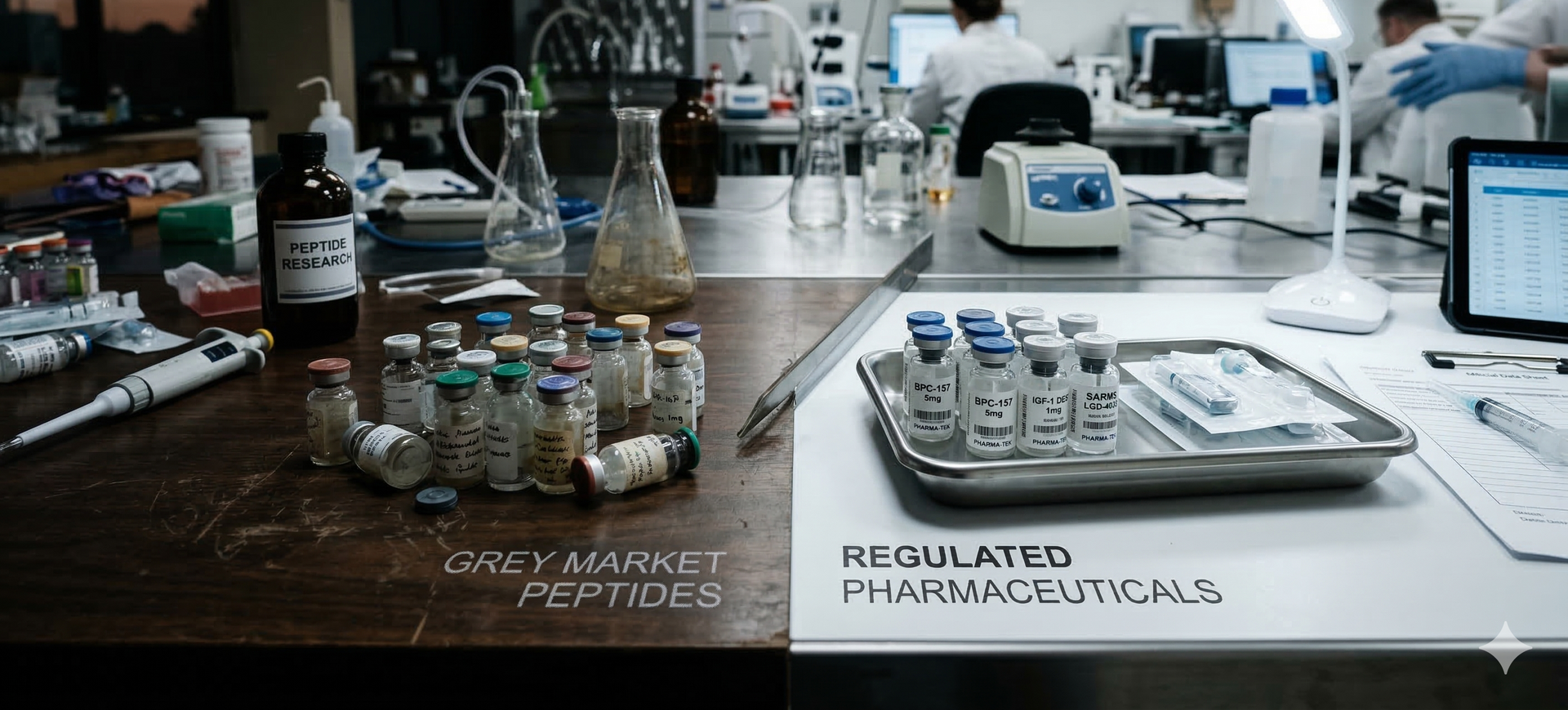
In early March 2026, Peptide Sciences replaced its website with a single message: the company had "voluntarily shut down operations and discontinued the sale of our research products." No refund information. No transition plan. No detailed explanation.
For a vendor that had been one of the more recognizable names in the grey-market peptide space, the silence was telling.
The closure appears voluntary in the technical sense Peptide Sciences chose to exit before being forced out. But the word "voluntary" deserves scrutiny.
Peptide Sciences had already received an FDA warning letter around 2023 for making health-related claims about compounds including BPC-157 and TB-500. That put them squarely on the agency's radar. Since then, the regulatory environment surrounding research peptides tightened considerably. The FDA moved several popular peptides to Category 2 status, blocking their use in pharmacy compounding. Warning letters went to compounders across the sector. In 2025, Amino Asylum's warehouse was raided.
Peptide Sciences had already responded by quietly pulling GLP-1 peptides from their catalog as enforcement pressure mounted. That partial retreat wasn't enough.
The business model selling peptides as "research chemicals" while the actual use cases were an open secret became increasingly difficult to sustain. Regulators had been treating grey-market peptide distribution as unlawful drug distribution, and that framing was gaining ground at an accelerating pace. Several other grey-market peptide vendors shut down or faced enforcement actions during the same window. Staying viable in that environment would have required significant investment in compliance infrastructure or a full pivot toward a regulated, pharmacy-style model.
Peptide Sciences appears to have concluded that neither path was worth pursuing.
The "research use only / not for human consumption" label that grey-market peptide vendors have long relied on was always a legal approximation rather than a clean regulatory shield. It created space for vendors to operate in a category that existed between pharmaceutical regulation and outright prohibition, grey, not black.
That grey zone has been narrowing. The FDA's attention to this space over the last 12 to 18 months represents the most sustained enforcement pressure the category has seen. The Peptide Sciences warning letter, the Category 2 scheduling decisions, and the Amino Asylum raid are not isolated events. They reflect a consistent agency posture: the "research only" framing does not immunize vendors from scrutiny when the downstream use patterns are well understood.
Commentary from physicians and industry observers frames the Peptide Sciences shutdown as part of a broader structural shift away from unsupervised grey-market sourcing and toward clinician-supervised, pharmacy-compounded products operating under stricter quality and safety standards. That trajectory is already underway in parts of the market.
The Peptide Sciences closure is not evidence that peptide research is ending or that every remaining supplier is one enforcement action away from disappearing. That reading would overstate what one shutdown can tell us.
What it does mean is that the sourcing landscape is less stable than it was twelve months ago. The companies with longevity will likely be the ones building toward compliance rather than around it. And the research use only label is offering less regulatory cover than it once did. That phrase carries a narrow legal meaning most buyers never examine, and understanding what research use only actually means matters more now than it did when enforcement was quieter. The regulatory pressure driving these market shifts is covered in detail in our analysis of RFK Jr.'s peptide war with the FDA.
The prescription pathway runs on a different set of rules, and those rules have been moving too. What a licensed pharmacy is permitted to compound is a separate question from what a research supplier can ship, and the current picture is laid out in our guide to peptides from a compounding pharmacy.
One name worth clearing up: a separate, newer company called Apollo Peptide Sciences emerged after the closure and absorbed much of the defunct brand's search traffic, so people searching for the old company often land on it. It is not a revival or a successor, and the two share nothing beyond a fragment of a name. It does publish Janoshik batch reports, which is a starting point rather than a full answer. What a certificate of analysis proves, and what it quietly leaves out, is covered in our breakdown of third party peptide testing and what it proves.
For anyone paying attention to this space, the Peptide Sciences exit is a data point worth understanding, not because it dictates a particular response, but because it shapes the context for every sourcing decision made going forward.
Peptide Sciences voluntarily ceased operations in early March 2026. The most consistent explanation points to escalating FDA regulatory pressure on the grey-market "research only" peptide model, which became increasingly difficult to sustain following warning letters, Category 2 scheduling decisions, and broader enforcement actions across the compounding sector.
There is no public record of a specific raid or forced closure. The company's own statement described the shutdown as voluntary. The broader context, however, includes a prior FDA warning letter to Peptide Sciences and sustained regulatory pressure across the grey-market peptide space.
Peptide Sciences has not issued public guidance on refunds, open orders, or customer data. Customers with outstanding transactions should contact their payment provider directly.
The emerging alternative is clinician-supervised, pharmacy-compounded peptides operating under tighter quality and safety standards. This model requires involvement from a licensed practitioner but offers more regulatory stability than grey-market sourcing.
Not entirely, but structural pressure is intensifying. Several vendors have closed or faced enforcement actions in 2025 and 2026. The "research only" model that defined the grey market is under sustained scrutiny, and the vendors likely to persist are those moving toward compliance-oriented or pharmacy-compounded models.
It signals that the sourcing landscape is less stable than it was a year ago and that the regulatory environment is actively reshaping which vendors can operate and how. It is not a definitive end to the category, but it is a clear indicator that the grey market is narrowing.
About the Author:
Jeff Nunn is the founder of Project Biohacking. With over 30 years of biohacking practice, he applies decades of self-experimentation methodology to peptide research, dosing math, and vendor evaluation.
Important Disclaimer: The content on Project Biohacking is for educational and informational purposes only and is not intended as medical advice, diagnosis, or treatment. Always consult a qualified healthcare professional before making any changes to your health regimen, starting new supplements, peptides, or protocols. Nothing on this site establishes a doctor–patient relationship, and you use the information at your own risk. Research compounds discussed here are sold for laboratory research purposes only and are not approved for human or veterinary use or consumption.
“For educational use only. Not medical advice. Read our full disclaimer.”
+1 214-278-4039
All Rights Reserved | Project Biohacking