About the Author:
Jeff Nunn is the founder of Project Biohacking. With over 30 years of biohacking practice, he applies decades of self-experimentation methodology to peptide research, dosing math, and vendor evaluation.

What Kennedy has actually done, what the FDA has actually changed, and what happens this summer, traced through primary sources rather than headlines.

By Jeff Nunn. Originally published November 2025. Updated July 27, 2026
When this post first went up in late 2025, the peptide war was mostly words. Patient-autonomy talking points, podcast appearances, and dust-ups with outlets that called peptides "unproven." Eight months later, the fight has moved from rhetoric to filings. The FDA has acted. Its outside expert panel met in July and recommended six of seven peptides, overruling the agency's own scientists.
Twelve peptides have moved off the restricted list, and parts of the press now describe the shift as Kennedy stacking the deck. If you are trying to work out what Kennedy has actually done, what the FDA has actually changed, and what the July vote actually decided, this is the full picture as of July 2026, built from primary sources rather than vibes.
This piece covers the politics and the process. For the practical side, which peptides a pharmacy can legally compound today, how the rules work, and how to vet a source, see our companion guide to
what compounding pharmacies can legally sell. For a worked example, see our
Biolongevity Labs reviews, which cover how one US vendor documents per-batch COAs for several of the compounds under review here.
The Pharmacy Compounding Advisory Committee met at White Oak on July 23 and 24. FDA career scientists had recommended against all seven peptides in their briefing documents. The committee recommended six.
| Day | Peptide | Vote (yes-no-abstain) | Indication reviewed |
|---|---|---|---|
| Jul 23 | BPC-157 | 8-6-1 | Ulcerative colitis |
| Jul 23 | KPV | 8-6-1 | Wound healing, inflammatory conditions |
| Jul 23 | TB-500 | 8-6-1 | Wound healing |
| Jul 23 | MOTs-C | 7-5-2 | Obesity, osteoporosis |
| Jul 24 | Emideltide ( DSIP) | 6-7-1 REJECTED | Opioid withdrawal, insomnia, narcolepsy |
| Jul 24 | Epitalon | 7-4-1 | Insomnia |
| Jul 24 | Semax | 8-5-1 | Cerebral ischemia, migraine, trigeminal neuralgia |
Free base and acetate forms were voted separately. Tallies held identical across both forms for every substance.
Six of seven sounds like a rout. Look at the numbers again. Not one vote cleared by more than two members, and DSIP failed by a single vote.
The reason the margins were that tight is the part most coverage buried. On June 29, 2026, weeks before the meeting, the FDA seated eight new temporary voting members. Reporting from Fierce Pharma frames that move as an attempt to blunt conflict-of-interest criticism already aimed at the standing panel over members' financial ties to clinics and businesses that sell peptides. Washington Post and Reuters coverage raised similar questions about the new appointees. On Day 1, that new bloc voted yes together on BPC-157, KPV and TB-500. It held until one member broke ranks on Day 2, which is exactly why DSIP is the one that failed.
None of that makes the recommendations illegitimate. Advisory panels get reconstituted, and every member's disclosures were public. But it does mean the outcome tracks who was seated more than it tracks any new evidence. FDA's reviewers looked at the same four-factor analysis they looked at in June and did not move. The science did not change between the briefing documents and the vote. The room did.
This post previously argued that the nominator presentations and the quality of the supporting data would shape the outcome more than anything else, and that heavy clinician participation in the docket would matter. That is not what happened. The data presented was substantially the same data FDA staff had already reviewed and rejected. Panel composition was the variable that decided it. Worth recording plainly, because the same dynamic will govern the February 2027 review of the remaining five.
Nothing yet. This is the second of three separate legal events, and they keep getting collapsed into one.
Removal from Category 2 on April 22, 2026 is done, and it was not legalization. A favorable PCAC recommendation on July 24, 2026 is done, and it is non-binding. Placement on the 503A Bulks List after notice-and-comment rulemaking has not started.
Only that third step makes compounding lawful. The FDA is free to accept the recommendations, modify them, or decline them outright, and its own staff is on record recommending the opposite. Rulemaking means a proposed rule, a public comment window, comment review, then a final rule. The mid-to-late 2027 window this post has cited since June still stands, and 2028 is realistic if the agency moves at its normal pace.
DSIP sits alone. A negative recommendation generally closes the current nomination, though substances can be re-nominated in later cycles. No timeline exists for that.
Kennedy's position has stayed consistent from February through May 2026, and it is narrower than many headlines suggest. He is not calling for peptides to become over-the-counter wellness products. His framing is about redirecting demand away from gray-market sellers toward what he calls "ethical suppliers," meaning licensed compounding pharmacies with proper sourcing.
On a late-February 2026 Joe Rogan appearance, Kennedy called himself a "big fan" of peptides, said he had used them personally with good results, and argued that most of the 19 peptides the FDA designated as Category 2 in 2023, by his count around 14, should move back toward eligibility (Frier Levitt analysis). The point he kept returning to was access through legitimate pharmacies rather than unregulated vendors.
On April 16, 2026, announcing the FDA's move, Kennedy said the action "will immediately begin shifting demand away from the black market" and promised the agency would "follow the science, enforce the law, and deliver the clarity patients, providers, and pharmacies deserve."
He also framed the original 2023 designation as having been done improperly by the prior administration. Whether that holds up is contested, since the FDA followed its standard interim procedure, but the political framing is the part that matters: this is positioned as undoing regulatory overreach, not as deregulation for its own sake. When the FDA published its April 15, 2026 notice starting the formal process, Kennedy posted that the action would begin restoring regulated access and start shifting demand away from the black market.
This is the piece mainstream coverage tends to flatten. Kennedy is not arguing that peptides should skip scientific review. He is arguing that they should go through it, by way of the advisory committee, and that the 2023 designation short-circuited that review. Agree or not, that is the actual argument on the table.
Political pressure turned into procedural action in mid-April 2026. The verifiable sequence:
February 2026: Kennedy's Joe Rogan announcement, promising action soon March 2026: Wall Street Journal and NPR coverage describes the wellness world bracing for change April 15, 2026: the FDA updates its 503A categories document with reclassification language; Kennedy posts a triumphant message April 16, 2026: a Federal Register notice (FR Doc 2026-07361) announces a Pharmacy Compounding Advisory Committee meeting for July 23 and 24, 2026, and opens docket FDA-2025-N-6895 for public comment April 22, 2026: the FDA formally removes 12 peptides from Category 2 because their nominations were withdrawn, including BPC-157, KPV, TB-500, MOTs-C, Emideltide (DSIP), Semax, Epitalon, Cathelicidin LL-37, Dihexa acetate, injectable GHK-Cu, PEG-MGF, and Melanotan II May 5, 2026: the original GHK-Cu nominator clarifies it meant to withdraw only the injectable-route nomination May 14, 2026: the FDA updates the categories document again, confirming that GHK-Cu in non-injectable routes is being added back to Category 1
The Pharmacy Compounding Advisory Committee, usually shortened to PCAC, is the FDA's outside panel of experts that reviews substances proposed for compounding. That is the actual paper trail. Kennedy talked, the nominators withdrew, the FDA dropped those peptides from the restricted list and scheduled the panel. As Foley & Lardner put it, Kennedy's stated interest in wider access may be contributing to the FDA's thinking, which is careful legal language for obvious political influence on the agency's timing.
What Kennedy has not done, and cannot do, is legalize anything by himself. The legal route still runs through the advisory committee, then a proposed rule, a public comment period, and a final rule. The earliest realistic window for any of the 12 peptides to be lawfully compoundable is mid-to-late 2027.
The wellness-influencer economy around peptides, the Instagram protocols, the "stack" recommendations, the longevity-clinic referrals, was already worth hundreds of millions of dollars before Kennedy got involved. His political signal did not create that market. It validated it.
Coverage from outlets like Fox News now describes a "wild west" peptide moment that reaches well past the GLP-1 weight-loss drugs that drew most of the regulatory attention in 2024. NBC News, Sky News, and PBS NewsHour have run pieces with nearly identical language: unproven, favored by wellness influencers, short on clinical evidence. That repetition is what Kennedy's supporters point to when they describe coordinated narrative control.
What the influencer layer often misses, and what serious readers should hold onto, is the single most important fact in this whole story: removed from Category 2 does not mean legal to compound. The FDA did not unban anything in April. It accepted that the nominations had been withdrawn, dropped the substances from the restricted list, and scheduled review. The door is open. Nobody has walked through it yet. For exactly why that gap exists and what is sellable right now, the
compounding pharmacy guide walks through the legal mechanics.
The FDA's 2023 Category 2 designations were not pulled from thin air. The agency cited specific concerns for specific peptides, many of which will be back on the table in July (BioSpace):
BPC-157 drew impurity and active-ingredient characterization concerns; MOTs-C drew immunogenicity worries, meaning the risk of an unwanted immune reaction, for some routes of use, plus the same characterization questions; KPV was flagged for a lack of human exposure data; and
TB-500 was flagged for limited human safety data.
None of these concerns are settled. The committee's job in July is to weigh them against the nominators' supporting evidence and clinician testimony. It will hear short presentations, take public comment, and then vote on whether each peptide should be added to the 503A Bulks List, the FDA's roster of substances a traditional compounding pharmacy may use, for the specific indication the FDA reviewed.
| Day | Peptide | Indication under FDA review |
|---|---|---|
| July 23 | BPC-157 (free base + acetate) | Ulcerative colitis |
| July 23 | KPV (free base + acetate) | Wound healing and inflammatory conditions |
| July 23 | TB-500 (free base + acetate) | Wound healing |
| July 23 | MOTs-C (free base + acetate) | Obesity and osteoporosis |
| July 24 | Emideltide / DSIP (free base + acetate) | Opioid withdrawal, insomnia, narcolepsy |
| July 24 | Semax (free base + acetate) | Cerebral ischemia, migraine, trigeminal neuralgia |
| July 24 | Epitalon (free base + acetate) | Insomnia |
The committee's recommendations are non-binding. The FDA can accept them, change them, or reject them in part or in whole. The honest read on the underlying science is that the evidence base for most of these peptides is thinner than enthusiasts admit and broader than the FDA's 2023 review acknowledged. Thymosin Alpha-1, notably absent from the July agenda and tied to a separate court deadline, has the strongest human data of any peptide in the dispute and is an approved drug in more than 30 countries for hepatitis and immune indications. BPC-157, by contrast, has the most enthusiasm and the least controlled human data.
The advisory-committee track is not the only pressure on the FDA. The agency was
sued in Texas by Evexias and Farmakeio under the Administrative Procedure Act, the federal law that governs how agencies make and justify decisions, over a lack of transparency in how it placed certain peptides in Category 2. That suit dealt with four peptides specifically: AOD-9604,
CJC-1295, Ipamorelin acetate, and Thymosin Alpha-1. The result is a
court-stipulated deadline of March 14, 2027 for the FDA to issue a final rule on those four, on a track separate from the July and February advisory-committee reviews. Selank, often grouped with these compounds in coverage, remains restricted but is not part of that court deadline.
Post-April coverage tracks a clear pattern. STAT News ran two pointed pieces, including one in late April asking whether Kennedy had stacked the deck on FDA oversight, and an earlier one framing the panel as already leaning toward his position. A USA Today opinion piece argued the move ignores serious risks. A Sciencing piece tied the peptide push to a broader pattern of working around FDA checks, mentioning a reported executive order on fast-tracking research peptides.
MAHA-aligned coverage tells the opposite story, framing the April action as a step toward restoring access and "radical transparency." The term some supporters use for the critical mainstream coverage, "Mockingbird media," references an old conspiracy theory about coordinated press messaging; it signals distrust of the outlets rather than a documented claim. Independent analysts in the compounding and longevity space, including attorneys at Frier Levitt and Foley & Lardner, have written measured takes noting that Kennedy's "ethical suppliers" framing is, read carefully, a pro-regulation argument, since it favors licensed pharmacies over unregulated vendors. Whether you read the coverage as journalism or as narrative pressure tends to depend on which side of the trust gap you already sit on. What both sides agree on is the timeline: the July review is happening, the procedural runway runs at least through 2027, and the outcome is genuinely uncertain.
Off the restricted list does not mean out of the fight. The money reshaping around this decision is substantial. Compounding pharmacies, especially traditional 503A pharmacies that lost a product line in 2023, stand to recover meaningful revenue if BPC-157, TB-500, and Thymosin Alpha-1 reach eligibility. FDA-registered manufacturers of pharmaceutical-grade active ingredient would gain a new supply channel. Longevity and integrative clinics gain clearer legal cover to prescribe. Online "research chemical" sellers, who operate in the gray market with
"research use only" labeling, face the most existential risk, since Kennedy's stated goal is to pull demand away from them.
On the other side sit branded drugmakers, with the sharpest fight in the
GLP-1 weight-loss space. The contrast in timing is striking. The same season Kennedy was pushing wider peptide access, the FDA moved the other way on GLP-1s: on April 30, 2026 it proposed to permanently exclude semaglutide, tirzepatide, and liraglutide from the 503B Bulks List used by larger outsourcing facilities, finding no clinical need to compound them now that the shortages have resolved. The agency has also warned companies that sold unapproved tirzepatide labeled for research purposes directly to consumers, as detailed in
FDA warnings on the tirzepatide research peptide. Novo Nordisk, whose Ozempic and Wegovy compete with compounded semaglutide, has been pressing to keep those restrictions tight. The wellness-influencer economy is the most visible layer, but it sits downstream of these institutional players. The real money moves at the ingredient and pharmacy level.
This is where the policy argument actually lives. The traditional FDA framework treats unapproved drugs as off-limits by default, with compounding as a narrow exception. The framing Kennedy uses treats access as the default that the FDA has to justify restricting.
Both have legitimate roots. The FDA's caution traces to real twentieth-century harms, from thalidomide to the era of unregulated human experimentation. The autonomy argument draws on decades of activism by HIV and AIDS patients, terminal cancer patients, and chronic-illness communities who watched needed treatments stall for years while people died. The peptide debate sits awkwardly between those poles, because most peptide use is not for life-threatening conditions. It is for tendon recovery, sleep, anti-aging, performance. The autonomy case is harder to make when the stakes are wellness rather than survival. The same logic still applies, though: adults with prescriptions and qualified clinicians arguably should be able to access compounds with reasonable safety profiles, even when efficacy data is limited. What July will test is whether the FDA's standard process can produce an answer the public actually trusts, on either side.
The peptide question is downstream of a larger shift. The biohacking and longevity movement that grew out of forums and podcasts a decade ago has matured into a multi-billion-dollar layer of clinics, brands, wearables, and monitoring platforms. Peptides are one piece of a stack that increasingly includes
NAD+ precursors, senolytics, mitochondrial compounds, and continuous glucose monitoring.
What has changed since this post first published is that the culture is now mainstream enough to have representation at the cabinet level. Whether that helps the movement is debatable, because political endorsement attracts both regulatory attention and political backlash. The same week Kennedy's peptide push made headlines, his comments on
antidepressants at a public health summit drew sharp criticism from clinicians. Association cuts both ways for peptide credibility. The steadier position right now is to use this window, while these substances may move toward legal access, to push for better data, better manufacturing standards, and clearer guidance, not for less oversight.
Kennedy's deepest critique is that the FDA's restriction patterns reflect pharmaceutical-industry interests more than impartial science. That is the regulatory-capture argument: that the 2023 designation happened to line up with the interests of companies whose products compete with compounded peptides. The counter-argument is that the 2023 decisions followed normal process and reflected real concerns about ingredient quality, immune reactions, and missing human safety data. Both can be partly true. A process can be procedurally sound and still produce outcomes shaped by which voices the agency weighs most heavily.
What is unusual now is that the FDA itself accepted the nomination withdrawals and committed to a public advisory-committee hearing. That is less a reversal of 2023 than an admission that the original process skipped the kind of open hearing the committee will now provide. Whichever way the vote goes in July, that step alone is a real procedural correction. The deeper question, whether the FDA's drug-approval framework fits newer modalities like peptides, cell therapies, and personalized medicine, will not be settled in 2026. The peptide case is functioning as a stress test for whether the system can adapt.
June 30, 2026: deadline to request an oral presentation slot at the July meeting July 9, 2026: deadline for written comments to reach the committee in advance July 22, 2026: final docket close
(FDA-2025-N-6895) July 23 and 24, 2026: advisory-committee meeting at the FDA's
White Oak campus in Silver Spring, Maryland; seven peptides reviewed August through December 2026: the FDA weighs the recommendations and decides whether to start formal rulemaking By end of February 2027: a second committee meeting reviews
five more peptides, including Cathelicidin LL-37, Dihexa acetate, injectable GHK-Cu, PEG-MGF, and Melanotan II March 14, 2027: court-stipulated final-rule deadline for the four litigation-track peptides (Ipamorelin, CJC-1295, AOD-9604, Thymosin Alpha-1) Mid-to-late 2027: earliest realistic window for any final rule actually adding peptides to the 503A Bulks List
What to watch through the end of 2026: whether the FDA opens rulemaking at all, and how quickly, since a favorable recommendation the agency never acts on is functionally a rejection; whether it follows the committee or its own reviewers, which is the real test of whether this process produced an answer the public can trust; the February 2027 review of the remaining five peptides, where the same panel composition question applies; docket FDA-2025-N-6895 for the comment record and any FDA response; and whether the conflict-of-interest criticism draws congressional attention or a legal challenge to the committee's makeup, which would be the fastest way for this to slow down.
Want a steadier read on a fast-moving story? We have tracked these primary sources daily since the story started moving in early 2026. If you are weighing how any of this applies to your own research and want a clear-headed sounding board rather than influencer hype, our peptide coaching turns the regulatory picture into context you can actually use.
FDA: 503A Categories document (updated May 14, 2026) FDA: Federal Register notice FR Doc 2026-07361 and docket FDA-2025-N-6895 (PCAC meeting, July 23 to 24, 2026) FDA: proposed 503B Bulks List exclusion of semaglutide, tirzepatide, and liraglutide (April 30, 2026) FDA Law Blog: analysis of the April 2026 peptide actions and the litigation track Frier Levitt, Foley & Lardner, Orrick, and Polsinelli: legal-industry analyses of the Category 2 removals BioSpace: summary of the FDA's 2023 safety rationales
Want a steadier read on a fast-moving story? We have tracked these primary sources daily since the story started moving in early 2026. If you are weighing how any of this applies to your own research and want a clear-headed sounding board rather than influencer hype, our
peptide coaching turns the regulatory picture into context you can actually use.
Kennedy views peptides as promising alternative therapies being unfairly restricted by FDA policy he characterizes as influenced Kennedy's stated position, repeated from his February 2026 Joe Rogan appearance through his April posts, is that the FDA's 2023 Category 2 designations were applied without enough process and that most of the 19 affected peptides should be reviewed for eligibility. He has called himself a fan, said he has used peptides personally, and framed the goal as moving demand from gray-market sellers to licensed "ethical suppliers." The substance is narrower than "deregulate peptides": he is arguing the standard FDA process, including advisory-committee review and rulemaking, should apply to peptides the way it applies to other compounded substances.
pharmaceutical interests. He's built political support among Americans skeptical of regulatory agencies and conventional medicine by positioning himself as an advocate for healthcare alternatives and patient choice. His pledge to end the FDA's "war" on peptides appeals to wellness communities and the supplement industry, both of which hope for relaxed oversight that would enable broader marketing and access.
It means the FDA dropped the explicit prohibition while it reopens review. It does not place a peptide on the 503A Bulks List, does not extend the FDA's enforcement-discretion policy to it, and does not make it FDA-approved. The 12 peptides removed in April 2026 cannot be lawfully compounded until the FDA finishes rulemaking after the advisory-committee review. For the full legal picture, see our compounding pharmacy guide.
For most of the disputed peptides, no. GHK-Cu in non-injectable forms is eligible for compounding again as of the May 14, 2026 update. The 12 peptides removed from Category 2 in April are no longer restricted but are not yet eligible, so they cannot be lawfully compounded until rulemaking finishes. Four peptides (Ipamorelin, CJC-1295, AOD-9604, and Thymosin Alpha-1) sit on a separate court track with a final-rule deadline of March 14, 2027. Kisspeptin-10 remains restricted. Online "research use only" vendors operate in a gray zone with no quality assurance. The practical, current breakdown lives in our compounding pharmacy guide.
Compounding pharmacies that lost product lines in 2023 are the most direct beneficiaries, along with FDA-registered ingredient manufacturers, longevity and integrative clinics, and the influencer-affiliate layer. The economic counterweight is branded drugmakers, sharpest in the GLP-1 space, where the FDA simultaneously moved to shut large-scale compounding of semaglutide, tirzepatide, and liraglutide. Online gray-market sellers face the most risk, since the stated policy goal is to move demand toward licensed pharmacies and away from them.
The advisory committee reviews seven peptides on July 23 and 24, 2026, and five more before the end of February 2027. The FDA then decides whether to start rulemaking, a process that runs more than a year. The four litigation-track peptides have a court-stipulated final-rule deadline of March 14, 2027. The earliest realistic window for any peptide to actually become legal to compound is mid-to-late 2027, and the outcome is genuinely uncertain.
No. In April 2026 the FDA removed 12 peptides from its restricted Category 2 list because nominations were withdrawn, but removal is not legalization. They are not yet eligible to compound and await advisory-committee review and rulemaking.
It is the FDA advisory-committee meeting on July 23 and 24, 2026, reviewing seven peptides for possible addition to the 503A Bulks List. Its recommendations are non-binding, and the FDA decides afterward whether to start rulemaking.
Twelve: BPC-157, KPV, TB-500, MOTs-C, DSIP, Semax, Epitalon, LL-37, Dihexa, injectable GHK-Cu, PEG-MGF, and Melanotan II. Non-injectable GHK-Cu was separately added back to Category 1.
Not before mid-to-late 2027 at the earliest. After the July 2026 review, the FDA must complete formal rulemaking, which runs more than a year. Four litigation-track peptides have a separate court deadline of March 14, 2027.
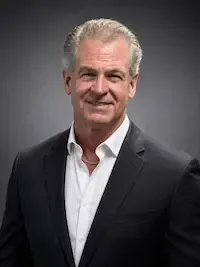
About the Author:
Jeff Nunn is the founder of Project Biohacking. With over 30 years of biohacking practice, he applies decades of self-experimentation methodology to peptide research, dosing math, and vendor evaluation.
Important Disclaimer: The content on Project Biohacking is for educational and informational purposes only and is not intended as medical advice, diagnosis, or treatment. Always consult a qualified healthcare professional before making any changes to your health regimen, starting new supplements, peptides, or protocols. Nothing on this site establishes a doctor–patient relationship, and you use the information at your own risk. Research compounds discussed here are sold for laboratory research purposes only and are not approved for human or veterinary use or consumption.
“For educational use only. Not medical advice. Read our full disclaimer.”
+1 214-278-4039
All Rights Reserved | Project Biohacking