
Project Biohacking BPC-157 Dosage Calculator
How the BPC-157 Dosage Calculator Works
The Project Biohacking BPC-157 Dosage Calculator is a free reconstitution and dosage tool for BPC-157 research. Enter your vial size, bacteriostatic water, and target dose to get the exact concentration and the units to draw on an insulin syringe.
Important: This calculator does not decide what dose to use. It converts a dose you already have into a concentration and a draw volume. BPC-157 is a research compound that is not approved for human use. Independently verify every calculation and confirm your product details before relying on any result.
This calculator is provided for informational and research-use reference only. It does not constitute medical advice and is not a prescription tool. Users are responsible for independently verifying all calculations and product information before use.
What do you need before drawing a BPC-157 dose?
This calculation gives you the exact volume to draw, but accuracy depends on the right supplies and correct reconstitution. Before measuring a dose, review how to inject peptides subcutaneously for syringe setup and injection technique, and how to reconstitute peptides for the mixing steps. For the compound itself and its safety profile, see whether BPC-157 is safe.
If your vial contains BPC-157 and TB-500 together rather than BPC-157 alone, this calculator will not give you the right answer, because it treats the full vial amount as one compound. A combined vial has to be split by each compound's share before the draw means anything. Use the BPC-157 and TB-500 blend calculator for those vials, or the TB-500 dosage calculator if you are working with TB-500 on its own. For dogs and cats, the peptide dosage calculator for dogs and cats accounts for animal body weight.
How do you use the BPC-157 dosage calculator?
Enter four values and the calculator does the rest.
- Select the amount of BPC-157 in your vial
- Select the bacteriostatic water you added to reconstitute it
- Select your target dose in micrograms
- Select your syringe size
It returns the vial concentration, the exact units to draw on a U-100 insulin syringe, and how many doses the vial holds. BPC-157 is dosed in micrograms, so most targets can be entered directly with no unit conversion. Change any value and the result updates instantly, which lets you compare a 5 mg and a 10 mg vial, or 1 ml against 2 ml of water, without redoing the arithmetic by hand.
How does the BPC-157 dosage calculator work?
The calculator runs three steps, and you can check each one by hand.
Concentration = vial amount ÷ water added. Draw volume = your target dose ÷ concentration. Syringe units = draw volume × 100 on a U-100 insulin syringe.
Worked in arbitrary numbers: say your target is 250 mcg, drawn from a 5 mg vial reconstituted with 2 ml of bacteriostatic water. Concentration is 5 mg ÷ 2 ml, which is 2.5 mg/ml, or 2,500 mcg/ml. Draw volume is 250 mcg ÷ 2,500 mcg/ml, which is 0.1 ml. Units are 0.1 ml × 100, which is 10 units. The 250 mcg here is an example input to show the arithmetic, not a suggested dose.
Every figure above appears in the result box, concentration, draw volume, and units side by side, so you can verify the conversion yourself rather than trusting a single number.
What is BPC-157 concentration after reconstitution?
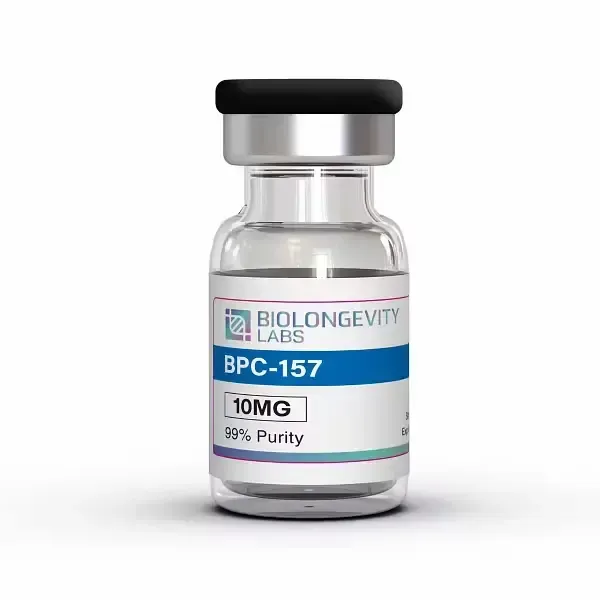
BPC-157 is typically sold as a lyophilized powder in 5 mg, 10 mg, and 15 mg vials, and the vial size drives every downstream number. Concentration is the peptide amount divided by the bacteriostatic water you add. A 5 mg vial reconstituted with 2 ml of water gives 2.5 mg/ml, or 2,500 mcg/ml. The same 5 mg vial in 1 ml of water gives 5 mg/ml, a stronger solution, so you draw half the volume for the identical dose. This is why entering your real vial size and your real water volume matters more than any preset: change either one and the units you draw change with it. For the properties of the bacteriostatic water itself and how it keeps a reconstituted vial stable, see the
guide to bacteriostatic water for peptides. For the reconstitution math common to every peptide, see the
main peptide calculator.
How are BPC-157 doses measured in mcg and mg?
BPC-157 figures in research-peptide protocols are usually expressed in micrograms per day, sometimes split into a morning and an evening administration. Protocols commonly reference roughly 200 to 500 mcg per day, but those are community-reported figures, not established human doses, since no completed human clinical trial of BPC-157 has set a dose. This calculator does not select any figure for you. It converts a target you already have into a concentration and a draw volume. If your source lists a daily total split across two administrations, enter the per-administration amount as the desired dose. For the animal research these figures are extrapolated from, and where the evidence is genuine versus thin, see
whether BPC-157 is safe.
What is BPC-157?
BPC-157, short for Body Protection Compound-157, is a synthetic peptide of 15 amino acids based on a protective sequence identified in gastric juice. It is studied in the context of tissue repair and appears in research on tendon, ligament, muscle, and gastrointestinal healing, along with an effect on inflammation. That repair mechanism is why accurate dose preparation matters to researchers working with it. This page is the calculation tool. For what BPC-157 is, how it works, what the animal research shows, and its safety profile, see
whether BPC-157 is safe.
How do you read BPC-157 units on an insulin syringe?
The calculator's accuracy depends entirely on the accuracy of your inputs, and two things carry the most risk. First, confirm the vial size printed on your product against what you enter, since a 5 mg vial entered as 10 mg halves every dose you draw. Second, match your syringe to your draw: BPC-157 doses are small, often a fraction of a 0.3 ml syringe, so precise reading on the unit marks matters more than syringe size. The result box shows the concentration and the exact units together, so you can check the injection volume against the math rather than trusting a single number. At these small volumes, a measuring error changes the delivered dose more than most people expect.
Important Disclaimer:
This peptide calculator is provided for research and educational purposes only and does not constitute medical advice, diagnosis, or treatment.
Assumption of Risk: Use of this calculator and any actions you take based on its results are at your own risk. We make no warranties regarding accuracy and are not liable for any damages, injuries, or losses arising from use of this tool.
Regulatory Notice: Many peptides are for research use only and may not be FDA-approved for human use. Verify the legal status in your jurisdiction.
Individual results vary. Never disregard professional medical advice or delay seeking it because of information on this website. In case of emergency or adverse reaction, seek immediate medical attention.
BPC-157 Dosage Calculator FAQ
Is the BPC-157 calculator medical advice?
No. It is a math tool for research and educational use only. It converts a dose you enter into concentration and syringe units. It does not recommend a dose, diagnose anything, or replace a qualified professional. Independently verify every calculation before relying on it.
How do I reconstitute a 5 mg BPC-157 vial?
Add bacteriostatic water to the vial and let the powder dissolve without shaking. The water volume you choose sets the concentration, so 5 mg in 2 ml gives 2,500 mcg per ml. Enter your vial size and water volume in the calculator and it shows the concentration and the units to draw for your target dose.
How many units of BPC-157 do I draw?
The unit count depends on your concentration and your target dose, not a fixed number. At 2,500 mcg per ml, a 250 mcg dose is 0.1 ml, or 10 units on a U-100 insulin syringe. Change your vial size, water volume, or dose and the unit count changes with it.
Why do BPC-157 calculators give different results?
Results differ when calculators assume different vial sizes, water volumes, or syringe types, or when they round differently. This calculator shows the concentration and the exact units so you can check the math against the vial size and water volume you actually used. More on this in our note on why peptide calculators differ.
Does the calculator tell me the right BPC-157 dose?
No. It performs unit conversions from the numbers you enter. It does not assess conditions or individual circumstances and does not recommend a dose. Dose figures in research-peptide protocols are community-reported and study-specific, not a recommendation for personal use.